
Review · CHICAGO
Lakefront Segway Tour in Chicago
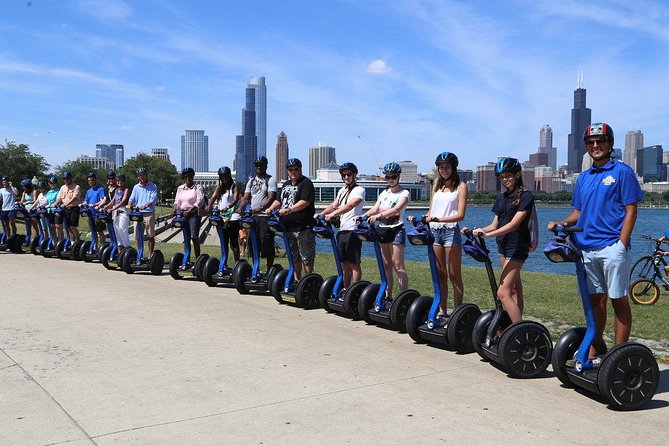
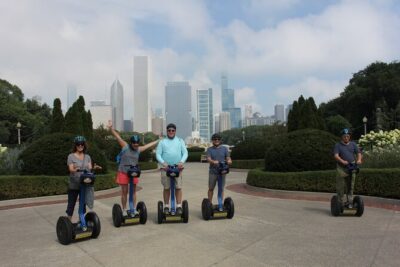
Chicago’s lakefront is made for a Segway. In about 90 minutes, you can roll from the Loop toward the Museum Campus, Soldier Field, Grant Park, and Millennium Park without burning your legs on a long walk. The best part is the open view of Lake Michigan, especially along the Chicago Lakefront Trail.
I like the small group, capped at eight, and the patient training before you set off. Guides such as Matt, Marty, Joe, Ivy, Vincent, and Andre have been praised for keeping riders safe, adding city stories, and stopping for photos. The main drawback is that this is more of a scenic ride with sightseeing than a detailed history tour, and weather or poor tour operations can occasionally spoil the day.
Key points to know before you book
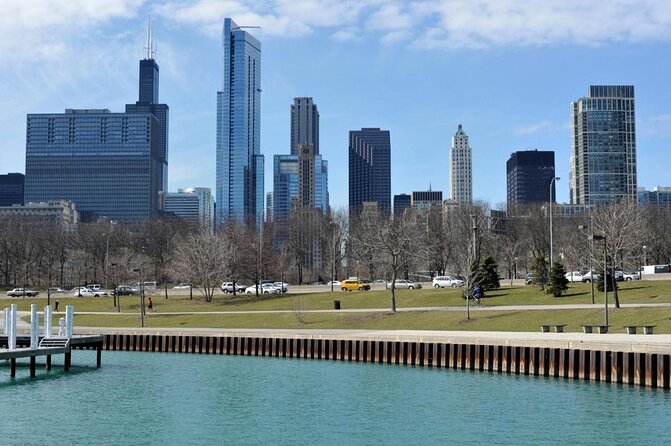
- You cover a wide slice of the lakefront: The route links the Field Museum, Adler Planetarium, Soldier Field, Grant Park, Buckingham Fountain, Millennium Park, and Northerly Island.
- The group stays small: A maximum of eight riders makes it easier for your guide to watch your balance, answer questions, and adjust the pace.
- Training is part of the experience: You receive Segway instruction and a helmet before riding into the city.
- The lake views are the star: The 18.5-mile Lakefront Trail gives you open water views and a pleasant break from downtown traffic.
- The tour suits first-time riders: Many riders learn the controls quickly, though you need to meet the age and weight rules.
- The storytelling can vary: Some guides add plenty of Chicago facts, while others focus more on leading the route and keeping everyone moving.
Why a Segway works well on Chicago’s lakefront
Chicago is easy to explore on foot in small sections, but the lakefront attractions are spread out. The Field Museum, Adler Planetarium, Soldier Field, Grant Park, and Millennium Park sit near one another, yet walking between them can take more time than you expect. A Segway gives you a middle ground: slower and more personal than a bus, faster and less tiring than walking.
You meet at 34 S Michigan Ave, near the southern end of the Loop. The tour ends at the same place, so you do not need to arrange a second pickup. Hotel pickup and drop-off are not included, and food and drinks are also up to you.
Your guide first explains how to stand, steer, speed up, and stop. This matters more than it may sound. A few riders have arrived worried about balance, including older participants, and still learned the technique after careful instruction. Closed-toed athletic shoes are strongly recommended. Sandals or loose footwear would make me less comfortable on a moving vehicle.
The maximum group size is eight. That is a useful limit on a busy city route. Your guide can keep an eye on new riders and pause for photos without managing a large line of Segways. It also leaves room for a more relaxed exchange with the guide.
Other segway rides we rate around the USA
- Washington DC “See the City” Guided Sightseeing Segway Tour
★ 5.0 · 1,924 reviews - Guided Segway Tour of Downtown Nashville
★ 5.0 · 1,568 reviews - 60-Minute Guided Segway History Tour of Savannah
★ 5.0 · 1,163 reviews
Riding from the Field Museum toward the lake
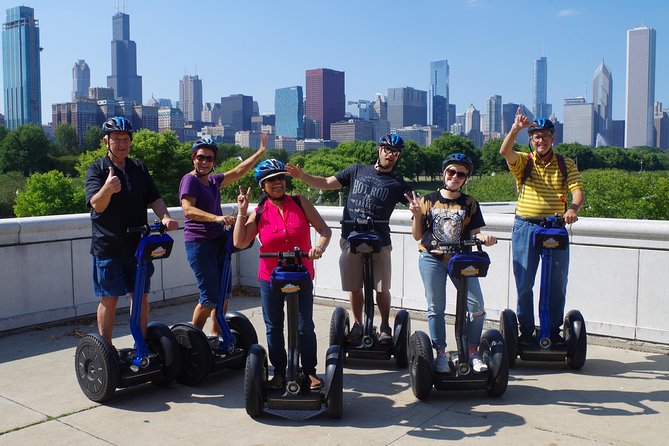
The Field Museum is one of the major early sights on this route, even if you do not enter the building. Its broad setting beside Lake Michigan gives you a good sense of how Chicago arranged its Museum Campus around open parkland and water.
Inside, the museum is known for Máximo the Titanosaur, SUE the Tyrannosaurus rex, an ancient Egyptian tomb, and exhibits covering more than 10,000 years of Chinese history and culture. The tour does not include museum admission or time to explore the galleries, so treat this stop as a visual introduction and save the interior for another visit.
That is one of the tradeoffs here. You see a long list of major attractions, but the tour is too short to visit them properly. If the Field Museum is high on your list, plan a separate block of time. The Segway ride helps you understand where the museum sits, not replace a museum visit.
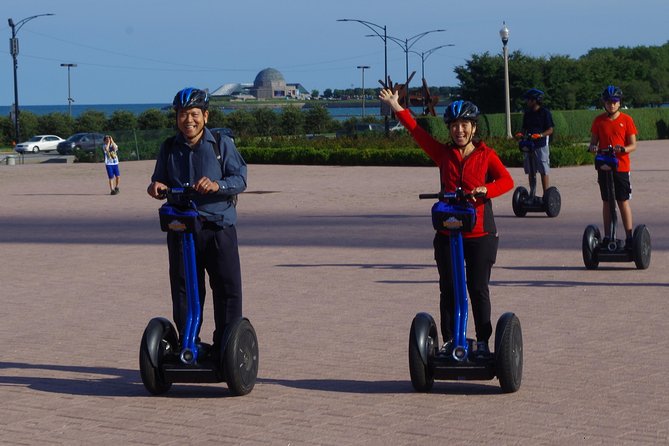
The route then follows the lakefront toward the Adler Planetarium. The open setting makes this section especially pleasant. You get broad views across the water and a different look back toward Chicago’s central buildings.
Adler Planetarium and the best lake views
The Adler Planetarium sits at the northeast tip of Northerly Island, directly on the Lake Michigan shore. It was founded in 1930 by Chicago business leader Max Adler and focuses on astronomy and astrophysics.
You may not have time to go inside during the ride, but the building’s location is a strong reason to include it in a lakefront tour. From this part of the route, you can appreciate how far the city reaches along the water while still keeping a sense of the downtown core behind you.
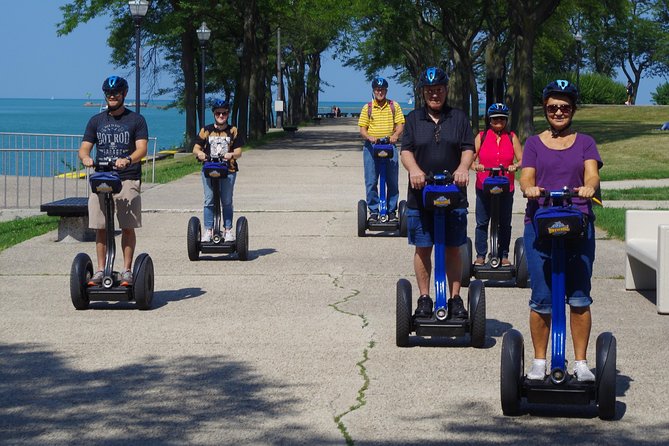
The ride along the lakefront is the experience’s strongest feature. The Chicago Lakefront Trail stretches for 18.5 miles and is shared by walkers, runners, cyclists, and skateboarders. You will not cover all of it, of course, but the route uses enough of this corridor to give you a real sense of Chicago’s public waterfront.
Pay attention to conditions on the day you ride. Wind can make the open shoreline feel much cooler than the streets downtown. Weather is also a genuine factor in the schedule. The tour can be canceled if conditions make riding unsafe, with a new date, full refund, or full credit offered if it cannot be rescheduled.
Soldier Field brings Chicago sports into the route
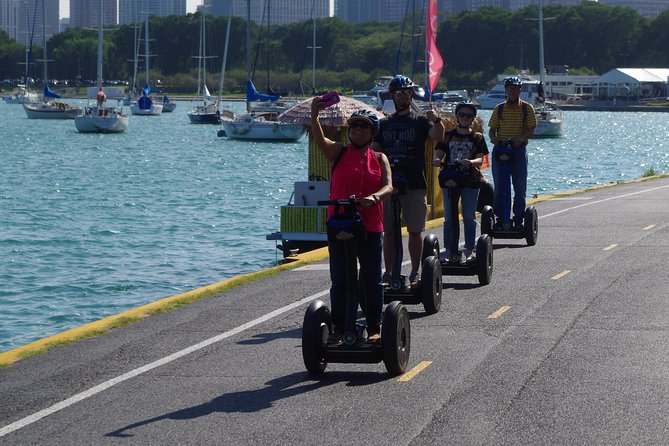
Soldier Field is a useful contrast to the museums and parkland. Opened in 1924, it is home to the Chicago Bears and Chicago Fire FC. The stadium sits near the Museum Campus, so it fits naturally into the route without sending you far out of the way.
You will likely view the stadium from outside rather than attend a game. That is enough to add a sports landmark to the ride, but do not book this tour as a stadium visit. The attraction here is the setting and the quick look at one of Chicago’s best-known venues.
The area can become busy during large events, races, and festivals. One past ride took place during a marathon and several music festivals, yet the guide still kept the group moving safely. That example also points to a practical issue: expect the route to change slightly if public events block a path or crowd a park.
Same streets, another route to glide:
- Fort Lauderdale Segway Tour
★ 5.0 · 1,017 reviews - 90 Minute Historic Uptown Neighborhood Segway Tour of Charlotte
★ 5.0 · 917 reviews - Pittsburgh Segway Tour
★ 4.5 · 769 reviews - 2-Hour Guided Segway Tour of Asheville
★ 5.0 · 676 reviews
Grant Park and Buckingham Fountain
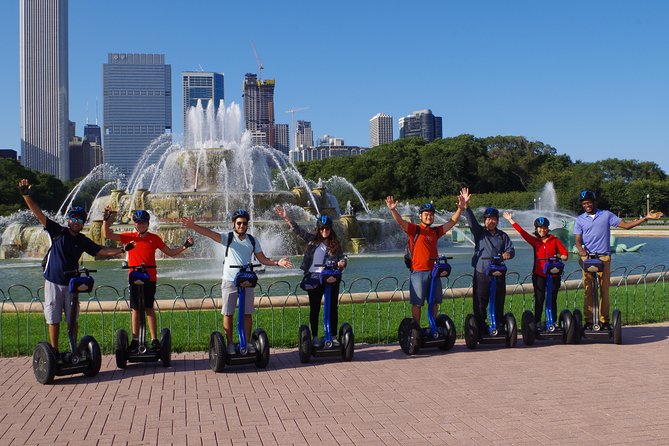
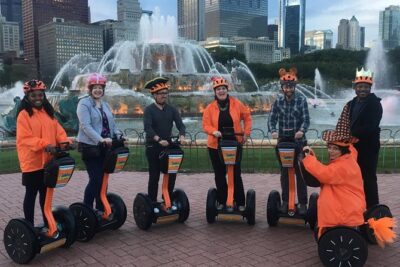
Grant Park is the green heart of central Chicago, covering 319 acres in the Loop. The park links several of the route’s main sights, including Millennium Park, the Art Institute of Chicago, Buckingham Fountain, and the Museum Campus.
On a Segway, you can cover more of this large park than you would on foot in the same time. I like this part of the tour because it connects the city’s landmarks rather than treating each one as an isolated photo stop.
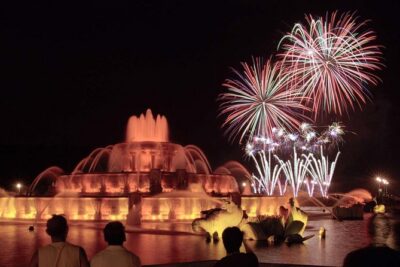
Buckingham Fountain sits near the center of Grant Park and was dedicated in 1927. It is one of the world’s largest fountains and a familiar Chicago landmark. The fountain’s display may be shut for a private event, maintenance, or another city occasion. If that happens, the stop loses some of its impact, and the backup sightseeing may be less informative.
That point matters if you are booking mainly for a checklist of landmarks. You will see the fountain area, but you cannot assume the water display will be running. Your guide may offer another nearby stop, though the quality of that substitute can vary.
Millennium Park adds the city’s modern face
Millennium Park began construction in 1998 and opened in 2004, four years later than planned. It sits above a parking garage and Millennium Station and is often described as the world’s largest rooftop garden.
The park is free to enter and includes Cloud Gate, the Crown Fountain, the Jay Pritzker Pavilion, and the Lurie Garden. It also links to other parts of Grant Park through the BP Pedestrian Bridge and Nichols Bridgeway.
The Segway tour gives you a quick look rather than a full park visit. Cloud Gate and the other attractions may be crowded, and your guide needs to keep the group together. You may have time for a photo, but do not expect a long stop at each feature.
Millennium Park is still valuable on this ride because it adds architecture and public art to the lakefront scenery. The route moves from museums and sports to gardens, performance space, fountains, and modern design. That variety is one reason the tour feels efficient.
What the guide adds to the experience
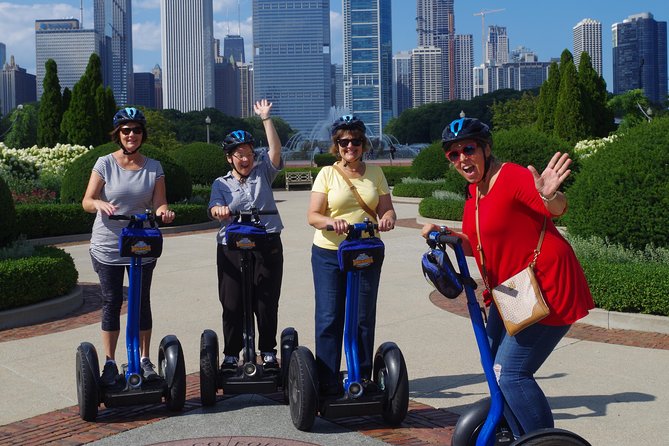
The guide can make or break a short tour. The best feedback has focused on patient instruction, safety, humor, and Chicago stories. Matt was praised for training a young rider while keeping watch over the whole group. Marty helped nervous riders get comfortable, and Joe was singled out for making the ride both informative and fun.
Ivy has been praised for bringing energy and local facts, while Vincent has been described as attentive, patient, and proud of Chicago. Andre also received strong marks for making riders feel safe. These names give you a useful sense of the guide team, but the exact person leading your ride depends on the date.
You should also keep your expectations in check. This is not a lecture on Chicago architecture or a museum seminar. Some guides share obscure facts and stories at several stops. Others keep the commentary lighter and focus on steering riders through the route. One less enthusiastic account found the ride itself more memorable than the landmark explanations.
I would book this if you want a moving introduction to the lakefront. If you want detailed dates, architectural analysis, or long stops at every attraction, choose a dedicated walking tour or museum visit instead.
The real value of the $75 price
At $75 per person, this is not the cheapest way to see Chicago. You can walk parts of the same area for free, and Grant Park and Millennium Park do not charge admission. You are paying for the Segway, training, helmet, guide, small group, and the ability to cover a broad route without tiring as quickly.
The value improves if you have only one day in the Loop or limited mobility for long walks, but you must still be able to ride a Segway safely. The tour is also a good fit for couples, families with eligible older children, solo visitors, and friends who want an activity rather than another indoor attraction.
You must be at least 12 years old and weigh between 100 and 260 pounds. Pregnant women cannot ride. Most people can participate, but these limits are firm practical considerations.
The tour is around 90 minutes. That is long enough to learn the controls, see several landmarks, and enjoy the waterfront, yet short enough to fit beside a museum visit or another downtown plan. Because you return to the starting point, you can continue sightseeing afterward without figuring out where to retrieve a vehicle.
The tour is often booked about 16 days ahead. I would reserve early if your schedule is tight, especially in good weather. Confirmation arrives within 48 hours, subject to availability.
How the experience compares with walking
A walking route gives you more freedom to stop, read plaques, enter buildings, and linger. A Segway route gives you range. You can reach the Adler Planetarium, Soldier Field, Grant Park, Buckingham Fountain, and Millennium Park in one connected outing.
The ride is also easier on your feet, but it is not passive. You need to listen, steer, balance, slow down, and watch the path. The training takes care of the basics, but you should still expect to pay attention.
The lakefront path is shared with other users. On a busy afternoon, you may encounter runners, cyclists, or crowded park areas. That is part of riding in a real city, not a closed course. A calm attitude and comfortable shoes will help.
Who should book this Chicago Segway tour
Book it if you want:
- A quick first look at Chicago’s lakefront
- A small group rather than a large sightseeing vehicle
- A fun way to link the Museum Campus, parks, and downtown
- A guided activity that includes training and a helmet
- A route with photo opportunities and open Lake Michigan views
- A break from walking between widely spaced attractions
Think twice if you want:
- Full interior visits to the museums or planetarium
- A long, detailed history talk at every stop
- Guaranteed fountain operation or a fixed route during city events
- A weather-proof activity
- A ride without age, weight, or pregnancy restrictions
The 4.6 rating from 145 ratings and 90 percent recommendation reflect the tour’s main strengths: the Segway itself, the scenery, the small group, and guides who take safety seriously. A few poor experiences involved cancellation, delayed staff, weak commentary, or a guide behaving unprofessionally. Those problems appear to be exceptions, but they are worth remembering when you value reliable timing and polished operations.
You can cancel for a full refund up to 24 hours before the local start time. Cancellations or changes inside that window are not refundable. Bad weather is handled separately, with a different date or full refund offered if the company cancels.
My verdict: book it for the ride and the views
I recommend the Lakefront Segway Tour if you want a lively, efficient introduction to Chicago’s shoreline. The best reason to book is not the promise of detailed landmark history. It is the chance to glide beside Lake Michigan, move through Grant Park, and connect major sights in a small group.
Choose it early in your Chicago stay, when the route can help you decide which museums or parks deserve a longer visit. Wear closed-toed athletic shoes, check the forecast, and arrive ready to learn the controls. If you see the tour as a scenic city ride with useful stories, the $75 price makes sense. If you want a deep historical tour, spend that money on a more specialized experience.
FAQ
Where does the Lakefront Segway Tour begin?
The tour begins at 34 S Michigan Ave, Chicago, IL 60603.
Where does the tour end?
The activity ends back at the same meeting point.
How long is the Segway tour?
The tour lasts approximately 1 hour and 30 minutes.
What sights are included on the route?
The route includes the Field Museum, Adler Planetarium, Soldier Field, Grant Park, Buckingham Fountain, Millennium Park, and sections of the Chicago Lakefront Trail.
Is Segway training included?
Yes. Training is provided before the ride, and a helmet is included.
How many people can join the tour?
The maximum group size is eight travelers.
What is the minimum age for riders?
Participants must be at least 12 years old.
Are there weight or pregnancy restrictions?
Riders must weigh between 100 and 260 pounds. Pregnant women are not allowed to ride.
What happens if bad weather cancels the tour?
If dangerous weather causes a cancellation, you will be offered a different date or a full refund if the tour cannot be rescheduled.
Just added for riders around the USA
- Cave Point & Whitefish Dunes State Park Segway Tour★ 5.0 · 3 reviews
- Manitowoc Shore Segway Tour w/ Private Tour Option★ 5.0 · 2 reviews
- Sturgeon Bay Canal City Segway Tour w/ Private Tour Option★ 4.5 · 4 reviews
- Saint Petersburg Scenic Segway Tour★ 5.0 · 39 reviews
- Cave Point/Whitefish Dunes Segway Tour★ 4.5 · 13 reviews
- Segway Tour in Historic Bonaventure Cemetery in Savannah★ 5.0 · 88 reviews
- Private Segway Experience Through La Jolla★ 5.0 · 8 reviews
- Santa Monica and Venice Beach Segway Tour★ 5.0 · 40 reviews
Chicago Segway Tours: how they compare.
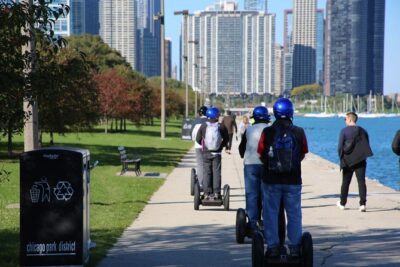
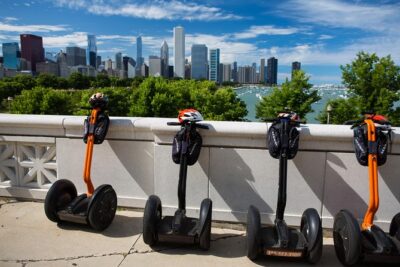
2-Hour Chicago Lakefront & Museum Campus Segway Tour
Read our review →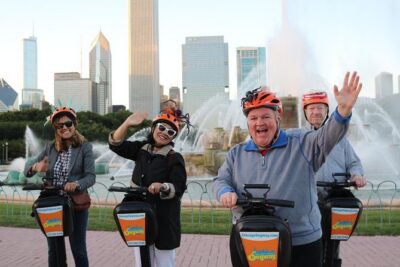
Chicago Landmarks & Museum Campus Small Group Segway Tour
Read our review →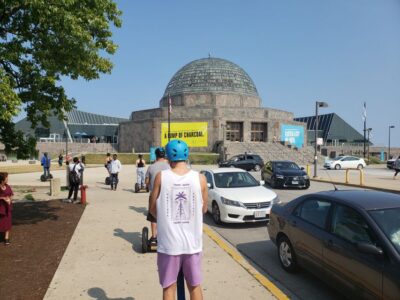

Find this segway ride in