
Review · USA
Pittsburgh Segway Tour
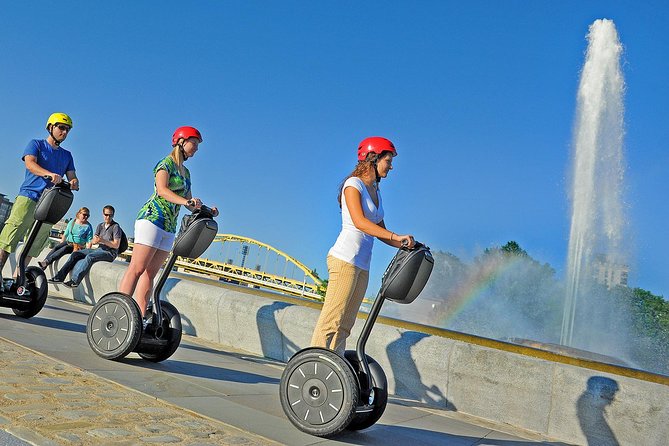
Pittsburgh makes a fine Segway city because its downtown sights sit close together, yet the rivers and bridges give the ride a sense of motion. In about two hours, you cross three famous bridges, roll past the ballparks, and see the sharp contrast between old stone buildings and modern glass towers.
I like the short training course at the start, especially if this is your first Segway ride. I also like the route’s range: Point State Park, Market Square, PPG Place, and the Cultural District all fit into one outing. The main drawback is that the ride focuses on downtown, so you get less of Pittsburgh’s steel-era story and neighborhood character.
Key details before you book
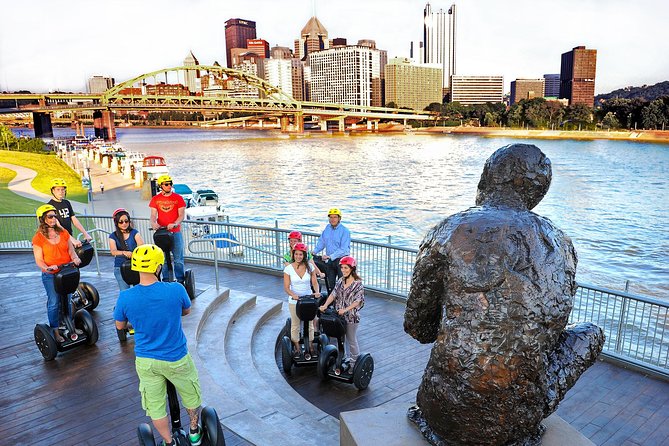
- Three bridge crossings: The route makes good use of Pittsburgh’s nickname, the City of Bridges, with crossings built into the ride.
- A proper practice session: You receive a short lesson before setting off, which helps you learn steering, balance, stopping, and safe riding.
- A fast downtown overview: In two hours, you cover more ground than you would on foot and pass many of the city’s central sights.
- Guides who keep the mood light: Geno is praised for being fun, patient, and attentive, including when one rider needed extra help.
- A group of up to 20 people: That is small enough for a personal feel, though the tour will not be private.
- Weather matters: The activity requires good weather, and cancellations for poor conditions come with a choice of another date or a full refund.
Starting at Station Square and learning the Segway
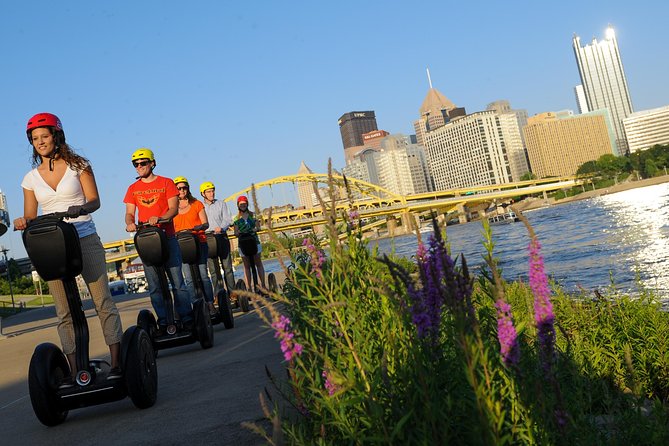
The tour begins at 228 W Station Square Drive, across the river from downtown Pittsburgh. The meeting point is near public transportation, which makes it practical if you are staying in the city and do not want to deal with downtown parking.
Before the sightseeing begins, you take a short training course. This is not filler. A Segway responds to small shifts in your weight, and the first few minutes can feel odd. One rider described needing time to get the hang of it, then finding the machine easy and fun once the controls made sense.
I would arrive ready to listen and practice rather than rush straight into the city. You need a moderate level of physical fitness, and you should feel comfortable standing and steering for much of the two-hour tour.
The instructor’s patience matters here. Geno receives particular praise for helping riders feel safe and for looking after someone with special needs. That suggests a considerate pace, although the ride can still feel fast once the group is moving.
Other segway rides we rate around the USA
- Washington DC “See the City” Guided Sightseeing Segway Tour
★ 5.0 · 1,924 reviews - Guided Segway Tour of Downtown Nashville
★ 5.0 · 1,568 reviews - 60-Minute Guided Segway History Tour of Savannah
★ 5.0 · 1,163 reviews
Crossing Pittsburgh’s bridges
The bridges are the route’s most memorable feature. Pittsburgh sits where the Allegheny and Monongahela rivers meet to form the Ohio River, so getting across the water is part of understanding the city.
The tour crosses three iconic bridges. You get changing views of the rivers, downtown towers, stadiums, and the surrounding hills, all while moving under your own control. On a walking tour, bridge crossings can feel like simple links between sights. On a Segway, they become part of the activity itself.
You should keep your eyes on the path and follow the guide’s instructions. Bridge traffic, crowds, and changing surfaces can require attention. The ride is meant to be safe and social, not a race.
This is also where the tour’s pace helps. Pittsburgh’s downtown core covers enough ground that walking between Station Square, the Point, the Cultural District, and the North Shore can take time. The Segway gives you a wider view of the city without turning the day into a long hike.
Market Square and Pittsburgh’s downtown core
Market Square sits at the intersection of Market and Forbes Avenue. It gives the tour a useful look at the center of downtown, where office buildings, restaurants, and public spaces meet.
The square is a good pause in the route because it helps you see Pittsburgh as a working city rather than only a collection of landmarks. It also sits close to PPG Place, so the two sights fit naturally into the same part of the ride.
PPG Place is one of downtown Pittsburgh’s most recognizable modern complexes. Its centerpiece is a 40-story office tower, surrounded by a five-and-a-half-acre site covering three city blocks. The glass design catches the sky, hills, rivers, and nearby buildings, making it especially noticeable from street level.
I like this part of the tour for the visual contrast. Pittsburgh is not only old courthouses and industrial stories. It also has polished modern architecture, and PPG Place gives you a clear example without requiring a separate architecture tour.
The Allegheny County Courthouse and the Cultural District
The Allegheny County Courthouse forms part of a complex with the old Allegheny County Jail. Both were designed by H. H. Richardson, whose work helped define the Romanesque Revival style.
You may not spend long at the courthouse, but the stop gives the ride some architectural weight. Its stonework and heavy Romanesque forms look very different from PPG Place’s glass and steel. Together, they show how quickly Pittsburgh’s downtown changes from one block to the next.
The route then reaches the Cultural District, home to two major performance venues. The Benedum Center for the Performing Arts occupies a theater at 237 Seventh Street. The building opened in 1928 as the Stanley Theatre, and its original purpose still shapes the feel of the site.
Heinz Hall for the Performing Arts is at 600 Penn Avenue. It is home to the Pittsburgh Symphony Orchestra and the Pittsburgh Youth Symphony Orchestra, with a 2,676-seat hall and roughly 200 performances each year.
These stops are useful for first-time visitors planning an evening in Pittsburgh. You get a quick orientation to the theater district, so you can return later for a performance or a closer look.
Same streets, another route to glide:
- Fort Lauderdale Segway Tour
★ 5.0 · 1,017 reviews - 90 Minute Historic Uptown Neighborhood Segway Tour of Charlotte
★ 5.0 · 917 reviews - 2-Hour Guided Segway Tour of Asheville
★ 5.0 · 676 reviews - 2-Hour Guided Segway Tour of Huntington Beach State Park in Myrtle Beach
★ 5.0 · 504 reviews
Point State Park and the meeting of three rivers
Point State Park occupies 36 acres at the tip of downtown, where the Allegheny and Monongahela rivers meet to form the Ohio River. This is one of the clearest places to understand Pittsburgh’s geography.
The park also gives the tour a change of pace. Instead of rolling through streets lined with buildings, you reach open space and water. The view explains why Pittsburgh developed where it did, and it gives you a chance to connect the city’s bridges, riverfronts, and downtown grid.
Fort Pitt Museum sits at the same important confluence. The museum includes indoor and outdoor areas and is administered by the Senator John Heinz History Center. Even if the tour only passes by, its location points to Pittsburgh’s military and frontier past.
This is also the part of the route where I would want more historical explanation. The ride does tell you about the city, but one useful criticism is that it may not spend enough time on steel, Andrew Carnegie, and the industrial forces that shaped Pittsburgh. If those subjects are central to your visit, pair the Segway tour with a museum or a separate history walk.
PNC Park, Heinz Field, and the North Shore
The route continues toward Pittsburgh’s sports district. PNC Park is home to the Pittsburgh Pirates and opened during the 2001 Major League Baseball season. It replaced Three Rivers Stadium after the older stadium was demolished.
The ballpark’s position along the North Shore makes it easy to understand how sports fit into the city’s riverfront plan. You get a quick look at the stadium rather than a full stadium tour, but baseball fans will appreciate seeing the Pirates’ home from the outside.
Heinz Field is also on the North Shore. It primarily serves as the home of the Pittsburgh Steelers and the University of Pittsburgh Panthers. The stop adds football to the route and gives the ride a broad look at Pittsburgh’s sports identity.
This section works best if you like seeing how a city uses its riverbanks. If you want a detailed look inside either venue, this tour will not replace a ticketed stadium experience. Its value is the wider view, linking the ballparks, bridges, rivers, and downtown in one moving route.
What the guide adds to the ride
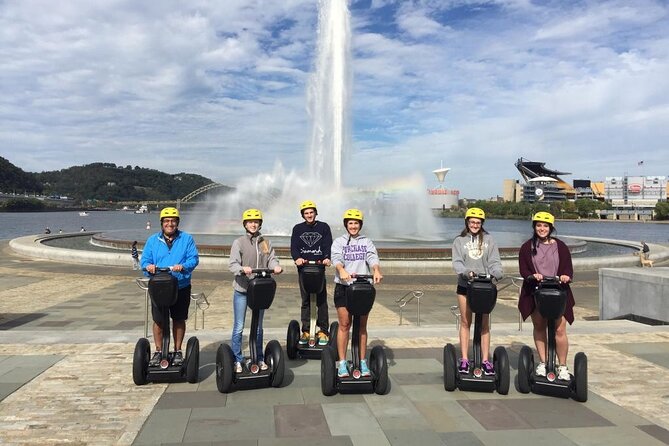
A Segway tour is only as good as its guide. You are not simply renting a machine and following a map. The guide controls the pace, gives safety instructions, shares local facts, and helps the group move through the city without losing anyone.
Geno is singled out as a fun guide who is patient with new riders. That matters because the skill level can vary widely in a group. Some people may be comfortable within minutes, while others need a little more time before they relax.
The tour also includes group photographs, according to the experience details. That is a nice touch because it lets you keep a record of the outing without stopping to arrange every picture yourself.
There is one practical concern: sound. One rider had trouble hearing the guide and suggested an earbud system. If you have difficulty hearing in an active street setting, position yourself near the guide and ask for important information to be repeated.
The group limit is 20 people. That keeps the outing from becoming enormous, but it is still large enough that you should not expect a private conversation at every stop.
How much ground you cover in two hours
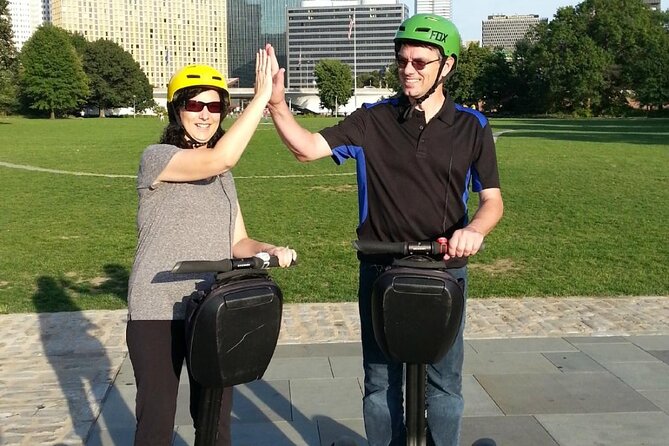
Two hours is a useful length for this route. It is long enough to reach the bridges, the Point, downtown, the Cultural District, and the North Shore without taking up your entire day.
The pace can feel quick. One group covered many local landmarks and found the ride fast-moving, while still describing it as informative and fun. That is a fair description of what this tour tries to do: provide a broad introduction rather than a slow, detailed study of each building.
I would book it early in a Pittsburgh visit. The ride can help you map the city in your head, then you can return on foot to the sights that interest you most.
You should also leave room in your schedule before or after the tour. Since it starts and ends at Station Square, you can use that area as a practical base for reaching downtown. The tour itself returns to the original meeting point.
Value, group size, and what you are really paying for
The supplied details do not give a price, so check the current total before booking. The value depends on how much you want to cover in a short time and how comfortable you are paying for an activity rather than a traditional walking tour.
You are paying for the Segway, the instruction, the guide, the safety management, and a route that covers several parts of central Pittsburgh. If you tried to walk the same distance in two hours, you would have less time to stop and look around.
The experience is a better value for first-time visitors who want an overview, families with older children who can meet the fitness requirements, and groups looking for something more active than sightseeing by bus. It is less suitable if you want a long discussion of Pittsburgh’s steel industry, Carnegie institutions, or neighborhood history.
The tour is recommended by 94 percent of participants and carries a 4.7 rating from 769 ratings. Those figures suggest strong satisfaction, but they do not erase the practical limits: the narration can be hard to hear, the pace may feel quick, and downtown architecture receives more attention than the city’s industrial past.
Weather, cancellation, and simple planning advice
The tour needs good weather. If poor conditions cancel it, you can choose another date or receive a full refund.
You can cancel for a full refund up to 24 hours before the start time. Changes or cancellations made within 24 hours are not accepted for a refund, so check the local cut-off time before making plans.
The activity is offered in English and uses mobile tickets. Public transportation is nearby, and the tour ends where it begins. The maximum group size is 20, and you should plan for a moderate level of physical fitness.
My best advice is to wear something that lets you stand comfortably and to treat the training session seriously. The Segway becomes much more enjoyable once you stop thinking about every small movement.
Should you book the Pittsburgh Segway Tour?
Book it if you want a lively, efficient introduction to Pittsburgh’s downtown, rivers, bridges, stadiums, and major civic buildings. The three bridge crossings are the strongest reason to choose it, and the short lesson makes the activity approachable for first-time riders.
Choose something else, or add a second tour, if your main goal is Pittsburgh’s steel history or its neighborhoods beyond downtown. The Segway ride gives you the city’s shape and major sights, but it is not a full historical study.
For many visitors, the best plan is to use this as an early orientation. You will cover a lot of ground, learn how the rivers and bridges fit together, and discover which places deserve a slower visit later.
FAQ
Where does the Pittsburgh Segway Tour begin?
The tour begins at 228 W Station Square Drive, Pittsburgh, Pennsylvania 15219.
Where does the tour end?
The activity ends back at the original meeting point in Station Square.
How long does the tour last?
The tour lasts approximately two hours.
Is a Segway lesson included?
Yes. You take a short training course before the sightseeing portion begins.
What language is the tour offered in?
The tour is offered in English.
How many people can join the tour?
The maximum group size is 20 people.
What landmarks does the route include?
The route passes Market Square, Point State Park, PPG Place, the Allegheny County Courthouse, the Benedum Center, Heinz Hall, Fort Pitt Museum, PNC Park, and Heinz Field.
How many bridges does the tour cross?
The route crosses three iconic Pittsburgh bridges.
Is the tour suitable for every fitness level?
The tour requires a moderate level of physical fitness. You should be prepared to stand and operate a Segway during the approximately two-hour activity.
What happens if the weather is poor?
Because the experience requires good weather, it may be canceled in poor conditions. You will then be offered another date or a full refund.
Can I cancel for a refund?
Yes. You can cancel at least 24 hours before the start time for a full refund. Cancellations or changes made less than 24 hours before the start time are not accepted for a refund.
Just added for riders around the USA
- Cave Point & Whitefish Dunes State Park Segway Tour★ 5.0 · 3 reviews
- Manitowoc Shore Segway Tour w/ Private Tour Option★ 5.0 · 2 reviews
- Sturgeon Bay Canal City Segway Tour w/ Private Tour Option★ 4.5 · 4 reviews
- Saint Petersburg Scenic Segway Tour★ 5.0 · 39 reviews
- Cave Point/Whitefish Dunes Segway Tour★ 4.5 · 13 reviews
- Segway Tour in Historic Bonaventure Cemetery in Savannah★ 5.0 · 88 reviews
- Private Segway Experience Through La Jolla★ 5.0 · 8 reviews
- Santa Monica and Venice Beach Segway Tour★ 5.0 · 40 reviews
USA Segway Tours: how they compare.

Washington DC “See the City” Guided Sightseeing Segway Tour
Read our review →
60-Minute Guided Segway History Tour of Savannah
Read our review →
90 Minute Historic Uptown Neighborhood Segway Tour of Charlotte
Read our review →
2 Hour Scottsdale Segway Tours – Ultimate Old Town Exploration
Read our review →
Find this segway ride in