
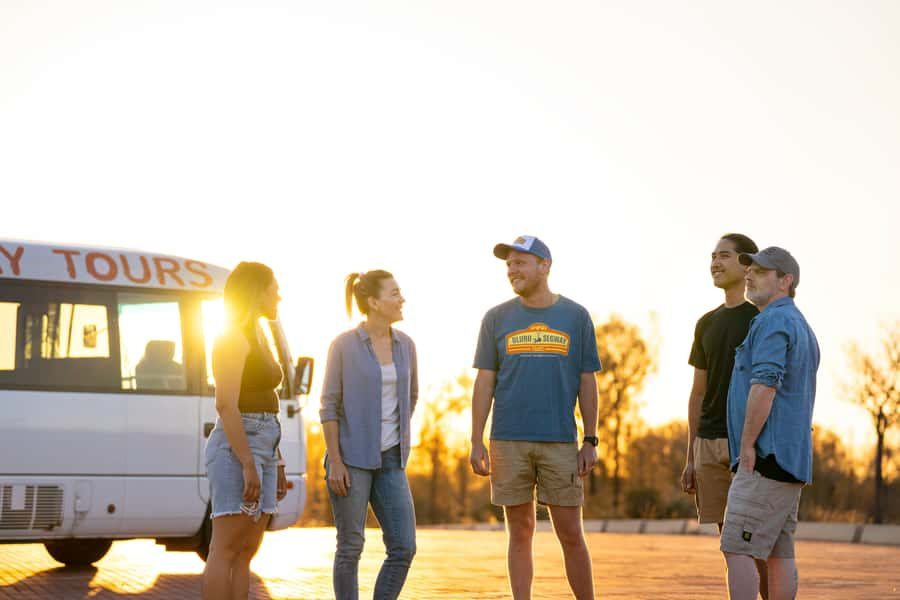
Review · AUSTRALIA
Best of Uluru – Segway and Walking Tour
Uluru’s broad red walls are best understood up close, and this tour gives you two useful ways to see them: a quiet Segway ride along part of the base and walks into caves, a gorge, and Mutitjulu Waterhole. I like the mix because you cover ground without committing to a long full-base walk, then slow down where the cultural details matter most. I also like the small groups, capped at 10, and the patient training for first-time riders.
The catch is that this is not a full circuit of Uluru, and it involves more walking than the Segway name might suggest. You will also need to buy the national park entry ticket separately, wear closed shoes, and be comfortable standing, walking, and riding for several hours in central Australia’s strong sun.
Best of Uluru by Segway: Key Points
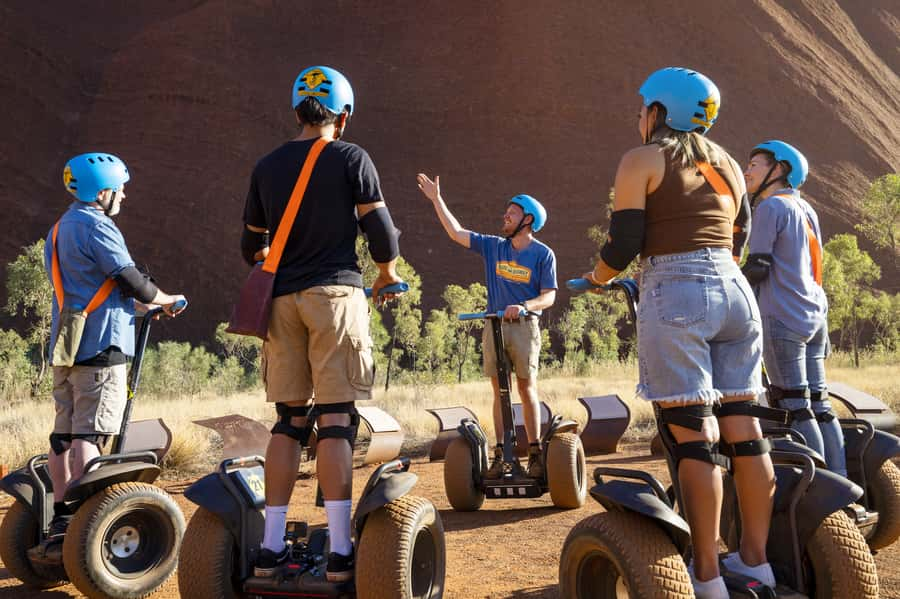
- Ride beneath Uluru’s sandstone walls: Cruise roughly a quarter of the rock’s base after a 30-minute training session.
- Walk to Mutitjulu Waterhole: Hear the quieter sounds of one of Uluru’s most striking water sites and see Aboriginal rock art.
- Explore Mala Walk and Kantju Gorge: Get close to caves and cultural sites that a simple bus visit can leave feeling distant.
- Learn from English-speaking guides: Guides including Sye, Tori, Britney, Nick, and Thomas have been praised for patient instruction, storytelling, and photography help.
- Small-group format: The tour is limited to 10 people, making it easier to ask questions and keep the group together.
- Plan for an active half-day: Expect 4 to 5 hours, with walking, Segway riding, transfers, and time for photographs.
Why the Segway and Walking Mix Works at Uluru
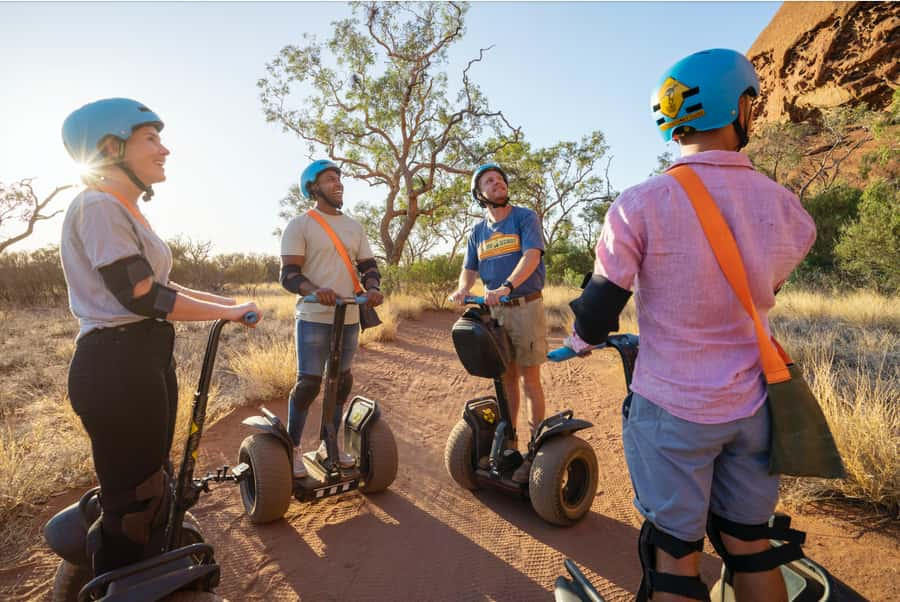
Uluru is enormous. Walking around its entire base takes time and energy, while a quick drive-by gives you little sense of its scale or texture. This tour finds a useful middle ground: you glide along one scenic section, then leave the vehicle for places where a guide can point out caves, rock art, water, and cultural meaning.
I like the Segway here because it keeps the pace gentle and quiet. Once you get used to leaning slightly forward and back to control the machine, you can look up at the sandstone walls instead of concentrating on every step. The surface is described by the operator as suitable for beginners, and several older participants found the training reassuring. One 62-year-old rider reported having no trouble, while another participant in their 60s said they learned easily.
Still, you should not book this thinking it is a ride-only outing. The Mala Walk, Kantju Gorge, and Mutitjulu Waterhole all require walking. One particularly useful piece of advice is to read the activity name as Segway plus walking, not Segway instead of walking.
Other segway rides we rate around Australia
- Brisbane Segway Sightseeing Tour
★ 5.0 · 629 reviews - Perth East Foreshore and City Segway Tour
★ 5.0 · 549 reviews - Segway the FULL base of Uluru
★ 5.0 · 449 reviews
Pickup at Ayers Rock Resort and the First 30 Minutes
The tour collects you from four Ayers Rock Resort locations: the Outback Pioneer Bar and Bottle Shop, Ayers Rock Campground, Desert Gardens Hotel, and Sails in the Desert. The transfer to the Uluru area takes about 30 minutes, and transport is also provided between the walking and riding sections.
That pickup system is handy if you are staying within the resort area, since you do not need to arrange your own ride to the rock. Check your selected pickup point carefully, especially if you are staying at Emu Walk Apartments or The Lost Camel, because the listed collection points also serve those properties.
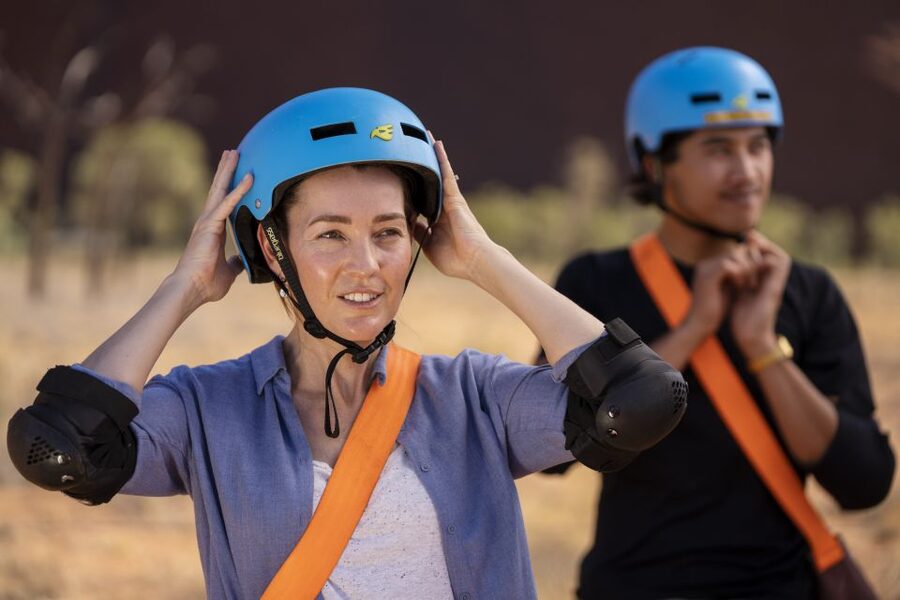
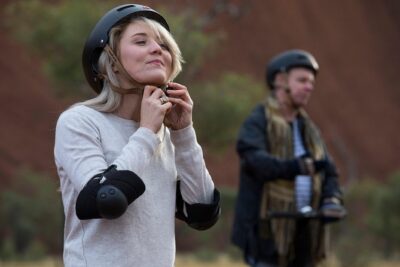
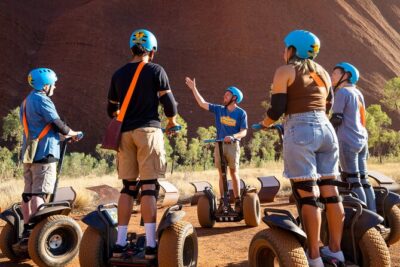
At the Segway base, your guide gives you a safety briefing and about 30 minutes of instruction. This is not a token demonstration. You get time to practice before heading toward Uluru, which matters if you have never ridden one before. Guides such as Sye, Sam, Emily, and Sarah have been praised for calm coaching, and the small group should make it easier to receive individual help.
Wear proper closed-toe shoes. Flip-flops are not accepted, and open footwear is specifically excluded. Bring a hat, sunglasses, and water. A phone or camera is useful, but start with a full battery or carry a power bank. One participant lost phone power halfway through and wished the bus had charging cords available.
Kantju Gorge and the Mala Walk
The day begins, or includes early on the route, with a guided visit to Kantju Gorge, scheduled for about 45 minutes. This is where the walking side of the tour earns its place. You are not simply looking at Uluru from a distance. You move into the rock’s folds, see caves and overhangs, and get close enough for the sandstone walls to feel physical rather than postcard-sized.
The guide connects what you see with Anangu culture, Uluru’s geology, plants, animals, and European contact. The strongest guides use simple objects, including sticks and rocks, to explain geological ideas. That kind of demonstration can be more useful than a long speech because it gives you something concrete to picture.
The Mala Walk adds another layer. You explore caves and rock shelters while learning about Aboriginal culture and the significance of the area to the Anangu people. You should expect the guide to explain the site with care rather than treat every rock formation as a photo prop. The cultural interpretation is one of the main reasons to choose this tour instead of simply hiring transport to Uluru.
The walking sections are also where the trip can feel more demanding than expected. One participant enjoyed the overall experience but felt some people had not realized how much walking was involved. If you have hip pain, limited stamina, or difficulty standing for long periods, consider that carefully. The Segway reduces the amount of walking between sites, but it does not remove it.
The 1.5-Hour Segway Ride Along Uluru
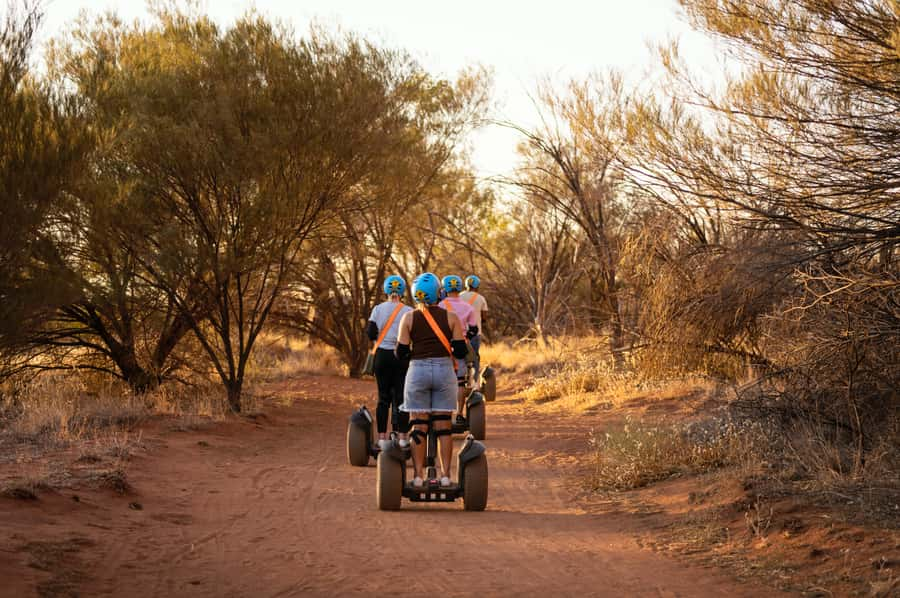
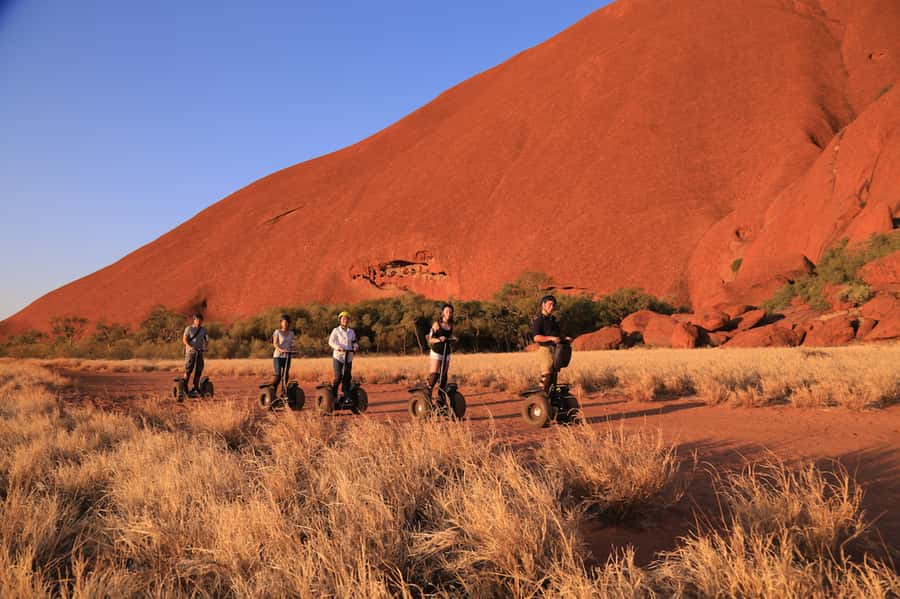
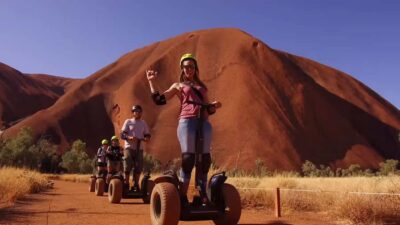
After training, you ride for about an hour along a scenic section of Uluru’s base. The overall schedule gives 1.5 hours to the Segway portion, including the changeover and riding time, while the included activity description specifies one hour of guided Segway touring.
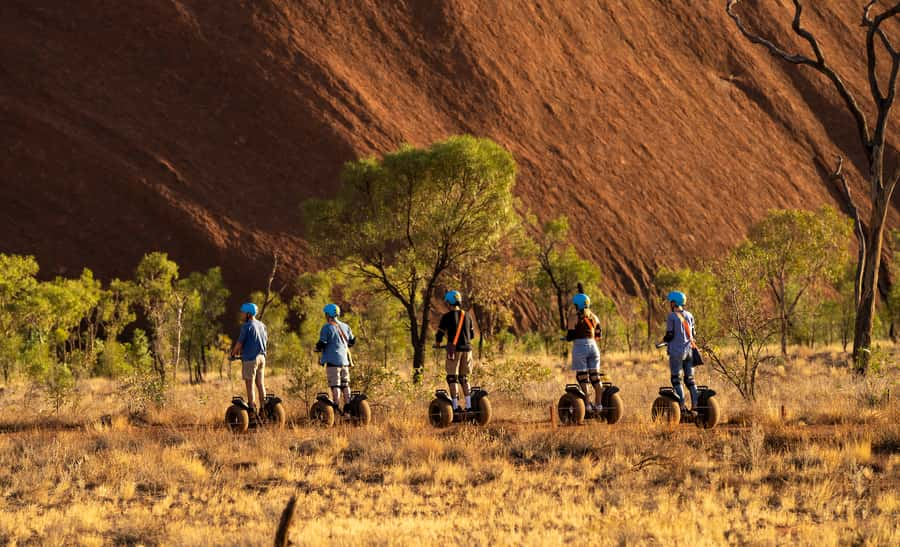
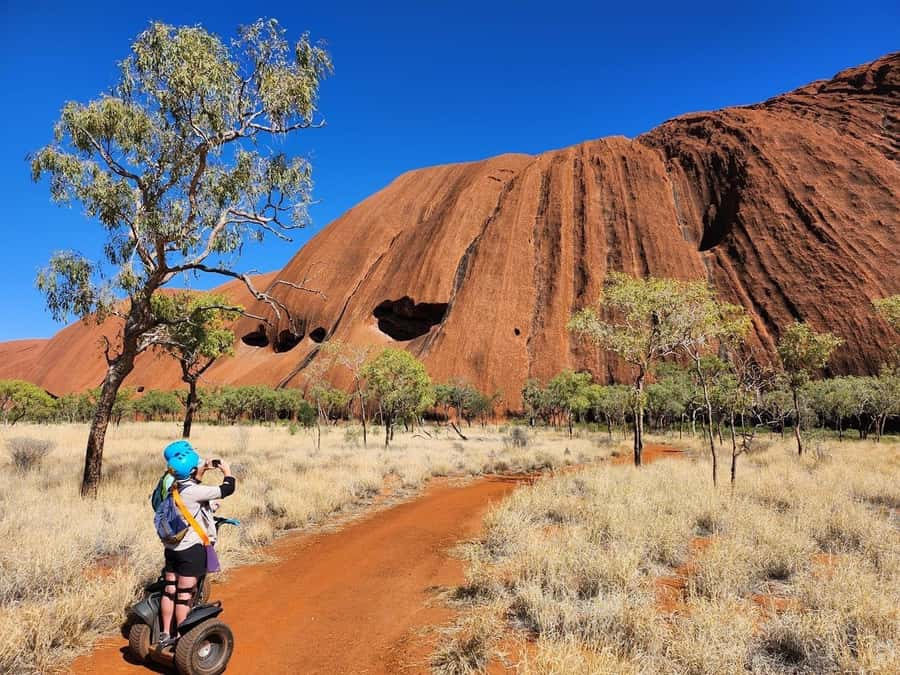
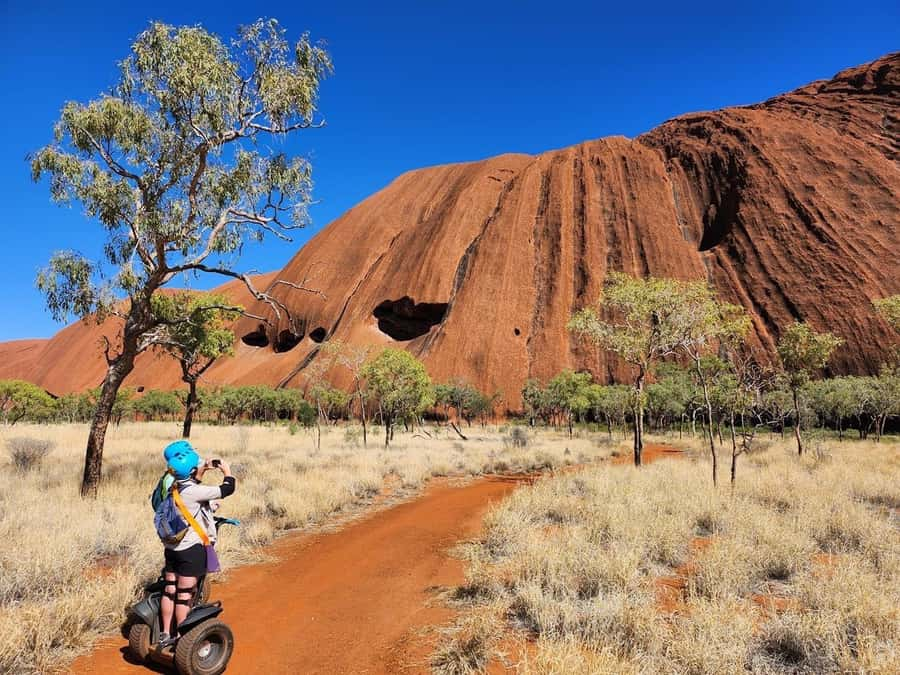
This is the visual centerpiece. From the base, you can study the changing surfaces of the sandstone, small cavities, vertical lines, and broad curves that disappear when you see Uluru only from a lookout. The machine moves quietly, so you can listen to the guide while keeping an eye on the rock.
The route covers roughly a quarter of Uluru’s base, not the full circumference. That limitation is important. You get a strong taste of the rock’s most scenic section, but if your goal is to circle all of Uluru, you will need another plan. A few participants wished the ride went farther or lasted longer. I would view that as a tradeoff rather than a flaw: the tour combines riding with two separate walks, and extending the Segway section would make the half-day less balanced.
Your guide interprets more than scenery. Expect information about Uluru’s geology, Aboriginal traditions, local plants and animals, and the area’s European history. The best part of the experience is the connection between those subjects. The rock is not presented as an isolated natural oddity. Its form, water sources, shelter, and stories all matter.
There is also time for photographs. Guides have been praised for stopping at useful viewpoints and taking group pictures, which is valuable when everyone wants a picture together. Keep in mind that intense sunlight, dust, and heat can affect phones quickly, so take care of your equipment before setting out.
Same streets, another route to glide:
- Uluru Base Segway Tour at Sunrise
★ 4.9 · 378 reviews - Brisbane Mini Segway Tour
★ 4.5 · 201 reviews - Best of Uluru & Segway
★ 5.0 · 186 reviews - 2 hour Brisbane Segway Afternoon & Sunset Thrill Tour
★ 4.8 · 169 reviews
Mutitjulu Waterhole and Aboriginal Rock Art
The walk to Mutitjulu Waterhole lasts about 30 minutes and gives the outing a quieter change of pace. Here, the guide leads you into a sheltered part of Uluru where water, rock, and sound create a different mood from the exposed base route.
The waterhole is not just a scenic stop. It helps explain why this part of Uluru mattered to the Anangu and how people used the area. You will also see authentic Aboriginal rock art, with the guide providing cultural context rather than leaving you to guess at what you are looking at.
This section rewards patience. You might hear more birdlife, notice small changes in the rock, or appreciate how dramatically the waterhole differs from the dry red surroundings. Conditions can vary, and the tour information does not promise a particular water level, so treat the stop as a cultural and natural site rather than a swimming visit.
The sequence also works well. After the movement and concentration of the Segway ride, you have time to walk, listen, and take photographs. Then the bus returns you to the resort, with the full tour lasting about 4 to 5 hours.
The Guides Make the Difference
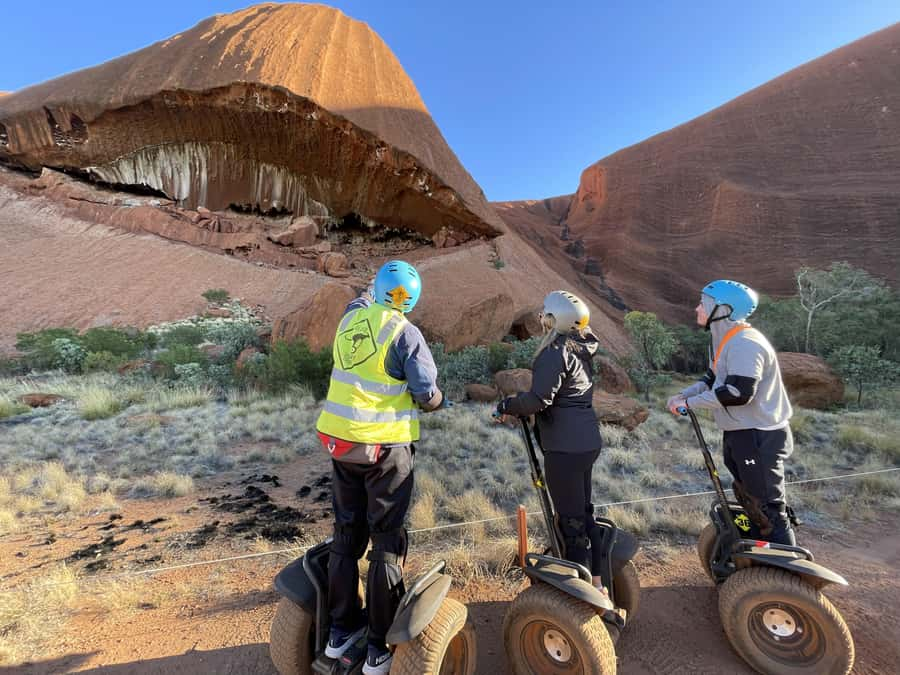
The most consistently praised part of this experience is the guiding. Guides named in the feedback include Sye, Nick, Kayla, Jess, Britney, Blaize, Tori, Thomas, Emily, Amber, Sarah, Kyle, Lizzy, Betty, Brandon, and Sam. You should not assume one particular person will lead your departure, but the repeated pattern is clear: instruction, cultural explanation, patience, and a willingness to help with photographs are central to the experience.
Names matter here because this is not a self-guided ride with a headset and a map. The guide determines how well the geology makes sense, how respectfully Aboriginal stories are presented, and how comfortable beginners feel on the machine. Guides have been praised for using plain explanations, answering questions, and helping older riders manage the activity.
The live tour is in English. Audio support is listed in Spanish, Chinese, French, German, Italian, and Japanese. If you need interpretation, confirm how the audio option works for your booking, since the guide’s live commentary is English.
Price, Time, and What You Actually Get
At $119 per person, this is not the cheapest way to see Uluru, especially because the Uluru-Kata Tjuta National Park entry ticket is extra. Still, the price includes hotel or campground transfers, Segway instruction, the guided ride, the Mala Walk, and the Mutitjulu Waterhole walk.
I see the value in the combination. A basic transfer can get you to Uluru, but it will not teach you to ride, take you along the base, or provide this much guided access on foot. You are paying for transport, equipment, instruction, and several distinct viewpoints within one half-day.
The value drops if you want only a long Segway ride. The ride is limited to part of the base, and the walking sections are a major part of the program. It is a good choice for someone who wants variety and interpretation, less so for someone who wants maximum riding time.
The small group, capped at 10, also helps justify the cost. A guide can keep an eye on beginners, answer questions, and stop for photographs without managing a large crowd. Transport is generally well regarded, although one useful improvement would be cold water on the bus. Bring your own water rather than counting on refreshments during the transfer.
Who Should Book This Uluru Experience?
This tour suits you if you:
- Want to see Uluru close up without walking its entire base
- Have never ridden a Segway but are comfortable learning
- Care about Anangu culture and want guided access to rock art and caves
- Prefer a small group to a large coach outing
- Enjoy combining an active experience with photography and storytelling
- Can walk for several short sections and stand on a Segway for about an hour
It is recommended for people aged 12 to 65. The restrictions are firm: children under 12, pregnant women, wheelchair users, people who cannot ride a bicycle, people with back problems, recent surgery, pre-existing medical conditions, or visual impairment should not take part. The listed weight range is 99 to 260 pounds, or 45 to 118 kilograms, and the activity is not suitable for people over 70.
These rules are not minor paperwork. A Segway requires balance and control, and the walking portions require enough mobility to keep up with the group. If you are unsure, ask the operator before booking.
Practical Tips for a Better Morning or Afternoon
Charge your phone fully and bring a power bank. The scenery invites constant photographs, and there may not be a reliable way to recharge on the bus.
Wear closed-toe shoes with a secure fit. Add sunglasses and a sun hat, and carry water. A fly net may be useful in warmer months. One participant found flies especially troublesome, so do not underestimate the value of a simple face net if conditions are active.
Allow for the full 4 to 5 hours rather than planning a tight connection afterward. Transfers, training, walking, and group photographs all take time.
Buy the national park entry ticket before the tour. It is not included in the $119 price, and every participant needs one. Also check your pickup location within Ayers Rock Resort so the morning starts smoothly.
Should You Book the Best of Uluru Tour?
Book it if you want a well-rounded introduction to Uluru, especially if a full base walk sounds too long or a bus-only visit sounds too distant. The best features are the patient Segway training, the small group, the chance to reach Mutitjulu Waterhole and Aboriginal rock art, and guides who bring geology and Anangu culture together.
Skip it if you want to ride around all of Uluru, avoid walking, or have medical and mobility concerns that make balancing and standing difficult. For most active visitors who want both movement and meaning, this is a strong-value half-day, provided you budget for the park ticket and arrive prepared for sun, water, and flies.
FAQ
How long does the Best of Uluru Segway and Walking Tour last?
The tour lasts about 4 to 5 hours, including transfers, Segway training, the guided ride, and walking visits to Kantju Gorge, Mala Walk, and Mutitjulu Waterhole.
What is included in the $119 price?
The price includes transfers from and back to selected Ayers Rock Resort locations, 30 minutes of Segway training, a guided Segway tour, a guided walk to Mutitjulu Waterhole, and a guided Mala Walk.
Is the Uluru-Kata Tjuta National Park entry ticket included?
No. Each participant must buy the national park entry ticket separately and in advance.
Do I need previous Segway experience?
No. The tour includes about 30 minutes of training, a safety briefing, and practice time before the guided ride.
What should I wear and bring?
Wear closed-toe shoes. Bring sunglasses, a sun hat, and water. Flip-flops and other open-toed footwear are not permitted.
Who cannot take part in the tour?
The activity is not suitable for children under 12, pregnant women, wheelchair users, people with back problems, people who cannot ride a bicycle, visually impaired people, people with certain medical conditions or recent surgery, people over 70, and people outside the listed weight range of 45 to 118 kilograms.
Just added for riders around Australia
- Uluru By Segway – Self Drive your Car to Uluru★ 5.0 · 65 reviews
- Guided Eco Segway Tours Four Mile Beach Port Douglas★ 4.5 · 48 reviews
- Gold Coast Segway Sightseeing Tour★ 3.0 · 2 reviews
- Whitsundays Segway Sunset and Boardwalk Tour with Dinner★ 5.0 · 80 reviews
- Rottnest Segway Coastal Explorer Tour★ 5.0 · 3 reviews
- Rottnest Fortress Adventure Segway Package★ 4.4 · 11 reviews
- Perth Segway 1.5-Hour East Tour★ 5.0 · 25 reviews
- Perth Segway 1.5 Hour Kings Park Tour★ 4.8 · 59 reviews
Australia Segway Tours: how they compare.
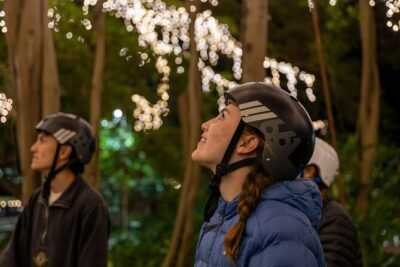
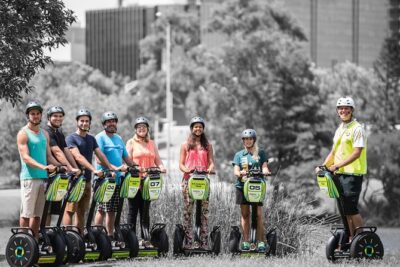
2 hour Brisbane Segway Afternoon & Sunset Thrill Tour
Read our review →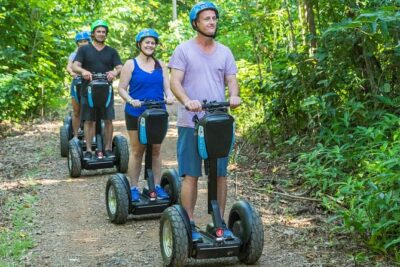
Find this segway ride in