
Review · BARCELONA
Barcelona: Montjuïc Segway Tour
Montjuïc is Barcelona’s best place for big views, leafy paths, Olympic landmarks, and a little breathing room from the city streets. This three-hour Segway ride lets you cover the port, lower Montjuïc, the castle, and the Olympic ring without spending the whole day walking uphill.
I like two things right away: the route mixes famous sights with quieter gardens, and the guides take time to teach first-time riders before setting off. Max, Oscar, and Danny are among the guides praised for friendly instruction, good English, humor, and the ability to adjust the route to the group. The main consideration is that a Segway requires balance and confidence, and the route can be shortened if you arrive late.
Key points before you book
- Montjuïc without the long climb: The Segway carries you from Paral·lel through the gardens and up to the mountain’s highest viewpoints.
- Two strong panorama stops: Mirador del Poble Sec and Mirador del Migdia give you different angles over Barcelona and the coast.
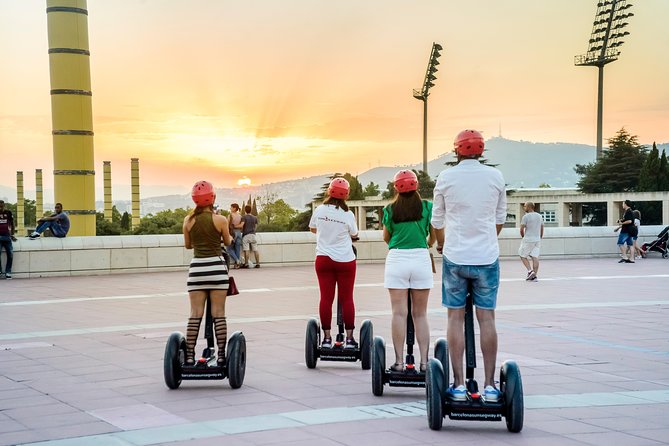
- A serious Olympic focus: You pass Palau Sant Jordi, the Olympic Stadium, the Olympic ring, and the Bernat Picornell pools.
- Good for first-time riders: Training comes before the tour, and past groups learned the controls in about ten minutes.
- A broad southern Barcelona route: Port Vell, Las Ramblas, Poble-sec, Montjuïc, museums, and historic theaters all fit into one outing.
- Know the age and weight rules: Segway riders must be at least 14 under city regulations, weigh between 45 and 120 kilograms, and children below the age requirement can use an e-bike instead.
Why this tour makes sense for Montjuïc
Montjuïc is not one compact sight. It is a broad hill with gardens, museums, sports venues, viewpoints, a castle, and scattered cultural attractions. Walking between all of these can eat up hours, especially on a warm day.
The Segway changes the rhythm. You ride between stops, then pause for short explanations, photos, and views. The listed stops are generally about five minutes each, so this is a sightseeing circuit rather than a museum tour. You will see the outside of many attractions, but admission to places such as Montjuïc Castle, the Joan Miró Foundation, and Poble Espanyol is not included.
At $78.44 per person, the tour is not the cheapest way to reach Montjuïc. You are paying for the vehicle, helmet, guide, instruction, and a three-hour route that connects many places difficult to combine on foot. I think the price is reasonable if you want broad orientation on your first day, especially if you would otherwise pay for several separate rides or spend much of the day climbing.
It is less useful if your main goal is to enter museums or spend a long time inside the castle. In that case, treat this as an overview, then return later with an admission ticket and more time.
Other segway rides we rate around Barcelona
- Barcelona Segway Tour
★ 5.0 · 680 reviews - Barcelona Segway Tour
★ 4.7 · 630 reviews - Barcelona: City Highlights Guided Segway Tour
★ 4.9 · 624 reviews
Starting near Paral·lel and the old port
The meeting point is at Jardins de les Tres Xemeneies, on Avinguda del Paral·lel, 49. It is close to public transportation and near the Apolo Theatre, which serves as the first marked stop and meeting area.
Expect a short introduction and practice session before the ride begins. The guides explain how to mount, stop, turn, and handle the Segway. This matters because the first few minutes can feel strange, particularly if you have never used one. The training is described as productive enough for a small group to get moving in roughly ten minutes, but you should still wear comfortable shoes and avoid arriving rushed.
The route then touches Las Ramblas and Port Vell. These brief passes give you a look at Barcelona’s famous central promenade and its old harbor before the ride turns toward Montjuïc. Port Vell helps you understand the city’s position beside the sea, while Las Ramblas provides a quick taste of the central urban core.
Do not expect a full walking tour of Las Ramblas or the Gothic Quarter from the published route. Some groups have received a broader southern-city route that included the Gothic Quarter and El Born, but the fixed focus here is Montjuïc. Street closures, demonstrations, and local conditions can change the exact path.
Gardens and the first views of Montjuïc
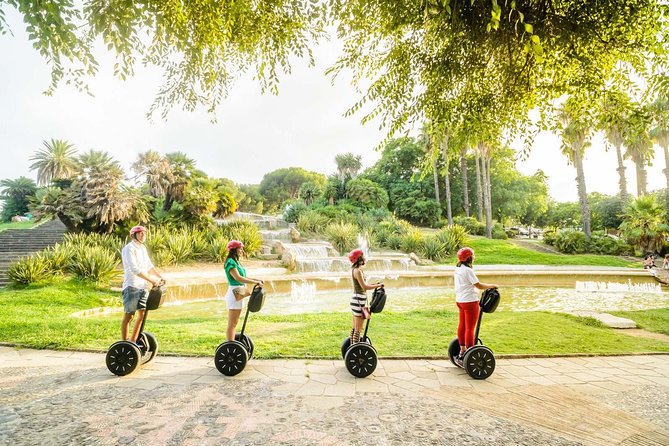
The route reaches the Mossèn Costa i Llobera Gardens, one of the more unusual green spaces on the hill. The garden is known for plant collections suited to a dry Mediterranean climate, making it a welcome change from the stone and traffic below. You will have a short stop, not a long botanical visit.
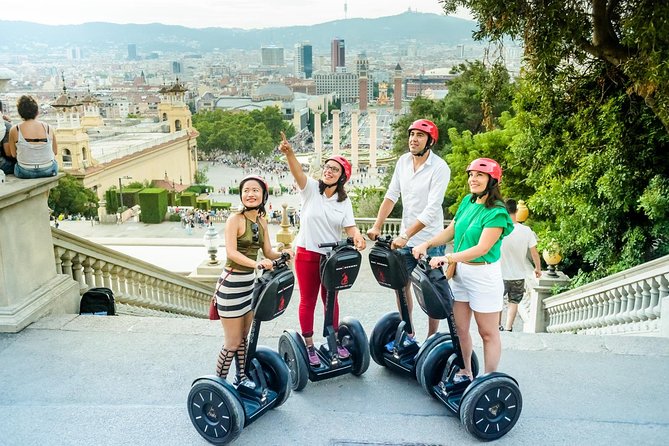
From there, the ride continues toward Mirador del Poble Sec. This viewpoint gives you a chance to look back toward the lower city and see how quickly Montjuïc rises above Poble-sec and Paral·lel. It is one of the first places where the city’s layout makes sense from above.
The guide may point out the Olympic Games of 1992 as the route climbs. That event reshaped this side of Barcelona and turned Montjuïc into a major sports and public-space center. The short stops mean the guide’s explanation is important. If you want detailed Olympic history, take notes and plan a later visit to the venues.
Jardins de Joan Brossa comes next. The former amusement-park site is now a large garden with paths and open areas. It gives the ride a quieter feel, and the Segway is useful here because you can move across the hill without repeating the steep walk between separate gardens.
Castle views and the top of the mountain
The Monument a la Sardana is a quick cultural stop connected with Catalonia’s traditional circle dance. It is not a major sightseeing site by itself, but it adds local context to a route otherwise filled with international architecture and Olympic facilities.
At Jardins del Mirador de l’Alcalde, the ride reaches one of Montjuïc’s strongest viewing areas. The name means the Mayor’s Viewpoint, and the setting looks out toward the port and city. This is a good place to slow down, take photographs, and let the guide explain the relationship between the hill, the harbor, and Barcelona’s central districts.
Montjuïc Castle follows. The tour stops at the castle area, but entrance is not included. You should think of this as an exterior visit and viewpoint stop unless you buy admission separately. The castle’s position makes it one of the clearest places to understand Montjuïc’s strategic role, though the time available here is too short for a full castle visit.
The route continues to Mirador del Migdia, described as the top of the mountain. This is the second major panoramic stop and one of the best reasons to choose the three-hour option. The view faces toward the coast and gives you a quieter perspective than the central city overlooks.
Because these viewpoints are exposed, weather matters. The tour runs in all weather, and raincoats are provided if needed. In severe conditions, you can be offered a different date and time. Dress for the season and bring a layer, since conditions on the hill may feel different from those at street level.
Same streets, another route to glide:
- Barcelona: 2-Hour City Sights Guided Segway Tour
★ 4.9 · 610 reviews - Barcelona: Guided Segway Tour
★ 4.8 · 412 reviews - Barcelona Guided Tour by Segway
★ 5.0 · 374 reviews - Barcelona: City and Seafront Guided Segway Tour
★ 4.9 · 317 reviews
The 1992 Olympic circuit
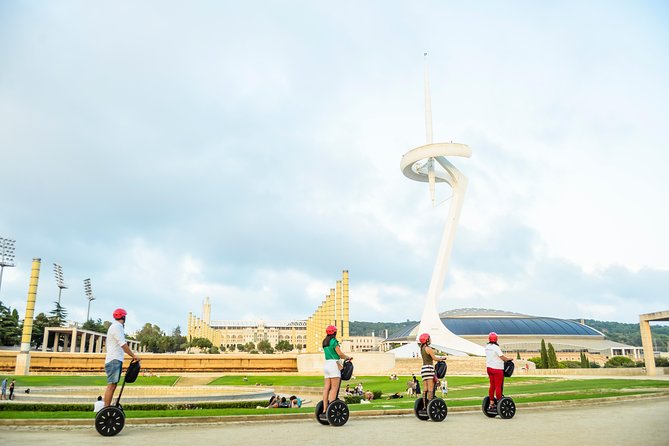
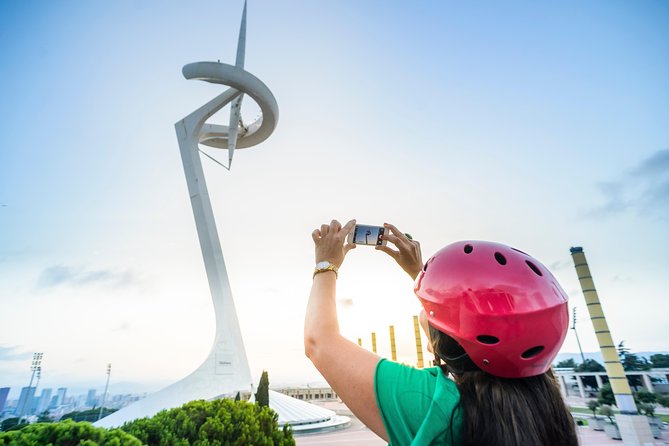
The Olympic section is the most concentrated part of the tour. You pass Palau Sant Jordi, the Olympic ring, Piscines Bernat Picornell, and Estadi Olímpic Lluís Companys.
Palau Sant Jordi is the large indoor arena built for the 1992 Games and later used for concerts and sporting events. The Olympic ring links several of the major venues, while the Bernat Picornell pools recall the swimming events. The stadium, named for Lluís Companys, is the centerpiece of the area.
These stops work well from a Segway because the venues are spread across a wide zone. On foot, you would spend more time covering ground between them. The trade-off is that each stop is short, so you will see the architecture and hear the main story rather than explore each building.
The sports area also shows a different side of Barcelona. The city is often presented through Gaudí, medieval lanes, and beaches, but the 1992 Olympics helped create the modern Barcelona that visitors recognize today. A good guide can connect the venues to the city’s transformation without turning the ride into a lecture.
Museums, fountains, and built Barcelona
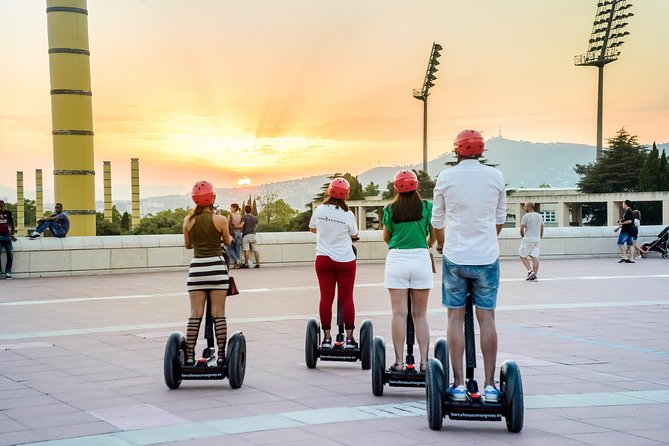
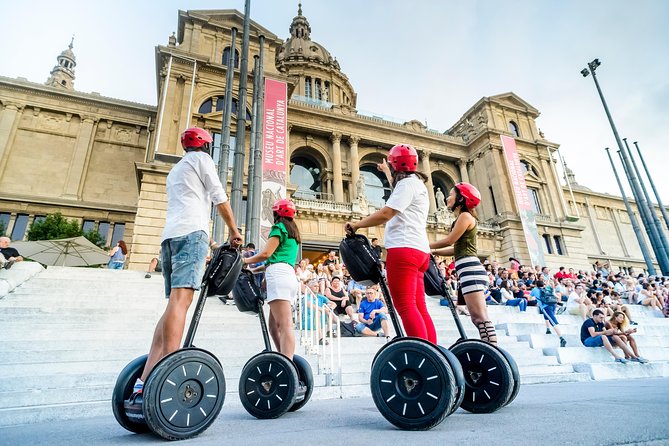
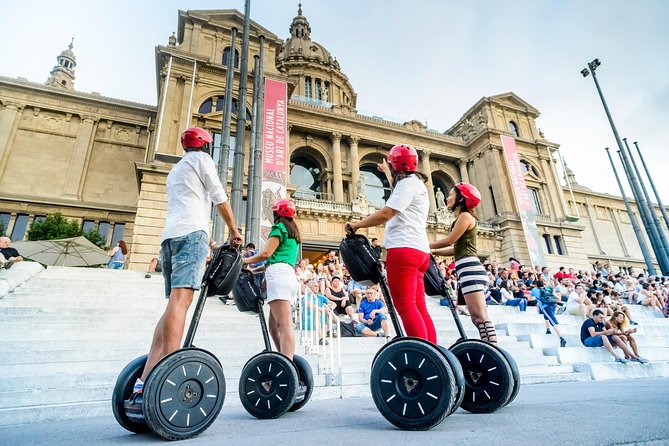
After the Olympic sites, the route passes the Joan Miró Foundation and the Museu Nacional d’Art de Catalunya. Both are major cultural destinations, but admission is not included and the schedule does not allow a proper museum visit.
The Joan Miró Foundation is the place to return if you want modern Catalan art and a closer look at Miró’s work. The Museu Nacional occupies the grand Palau Nacional and is important for Catalan art, Romanesque paintings, and the broad view from its terrace. On the Segway, you mainly get the setting and an introduction.
The Magic Fountain is another outside stop. Its shows and operating schedule can vary, so do not book this tour solely for a fountain performance. The stop is useful because it places you below the National Art Museum and helps you understand the monumental approach to Montjuïc.
Poble Espanyol comes next. This open-air architectural complex presents buildings and styles from different parts of Spain. It is a paid attraction, and the tour does not include entry. You can return independently if you want shops, workshops, restaurants, and a longer look at the recreated streets.
The Museum of Archaeology of Catalonia is also passed along the route. Again, this is an orientation stop rather than a museum visit. If ancient history is high on your list, plan a separate visit.
Teatre Grec, an outdoor classical amphitheater, brings the route back into Montjuïc’s gardens and performance spaces. It is an attractive setting, but the short stop will not replace attending a show or exploring the theater at leisure.
Returning through Poble-sec
The final section heads through El Poble-sec and along Avenida del Paral·lel, sometimes called Barcelona’s Broadway because of its concentration of theaters and performance venues. This return route gives you a street-level look at the neighborhood where the tour began.
Poble-sec is a useful contrast to the hilltop gardens. It is a lived-in district with local streets, restaurants, and theater culture rather than a single postcard sight. The guides may share suggestions for places to eat, and the staff can provide practical help with restrooms and continuing your day after the ride.
The activity finishes back at Jardins de les Tres Xemeneies. Since there is no hotel pickup or drop-off, you need to make your own way to and from the meeting point. Public transportation is nearby, which makes the start fairly manageable.
Guides, group size, and the feel of the ride
The guide can make or break a Segway tour. Max is praised for patient training, friendly humor, and a route that can include less obvious parks and local eating areas. Oscar is described as careful, enthusiastic, and especially good at explaining plants and the natural areas of Montjuïc. Danny is noted for tailoring the route to the group and making the three hours feel full without rushing.
The group limit is 30, though some rides may be much smaller. A small group is more comfortable on paths and makes it easier to ask questions or adjust the pace. A full group may feel less personal, particularly during the training period and photo stops.
The tour may be led by a multilingual guide. English is offered, but if precise historical explanation is important to you, confirm the language arrangement when booking. Guides are also allowed to alter the route because of street closures or demonstrations.
Who should book it
I would choose this tour if you want to see a large section of Montjuïc in one morning or afternoon, prefer moving between sights rather than walking uphill, and like having a local guide explain what you are seeing. It is particularly useful on a first visit, when you want a map in your head before deciding which museums or venues deserve a return visit.
It also suits first-time Segway riders who are comfortable learning a new vehicle. The guide-led practice helps, but you still need balance and attention. Comfortable walking shoes remain sensible because you will stand for much of the three hours and pause at multiple sites.
Families should check the age rules carefully. The minimum age to join the activity is 10, but city regulations require Segway riders to be at least 14. Children below that riding age can use e-bikes, offered at reduced prices. Riders must weigh at least 45 kilograms and no more than 120 kilograms.
This is not the right pick if you dislike group activities, want long visits inside museums, or prefer to explore at one site for half a day. The route covers a lot, but its strength is range, not extended time at individual attractions.
Practical booking advice and cancellation
Arrive early. If you are more than 15 minutes late, the activity can be canceled without a refund, and a smaller delay reduces the riding time. Bring a passport or ID, with a copy accepted, and dress for the season. The provider supplies helmets and raincoats when rain requires them.
Free cancellation is available up to 24 hours before the start time. Changes or cancellations inside that period are not accepted or refunded. Since the tour can be affected by severe weather, ask about rescheduling if conditions become unsafe.
FAQ
How long is the Montjuïc Segway tour?
The tour lasts approximately three hours and finishes back at the meeting point.
Where does the tour begin?
It begins at Jardins de les Tres Xemeneies, Avinguda del Paral·lel, 49, in Barcelona’s Sants-Montjuïc district.
Is hotel pickup included?
No. Hotel pickup and drop-off are not included. The meeting point is near public transportation.
What does the price include?
The price includes use of a Segway, a local guide, and a helmet. Food, drinks, attraction admission, and hotel transfers are not included.
What is the minimum age for a Segway?
The activity minimum is 10 years old, but city regulations require Segway riders to be at least 14. Children below that age can use e-bikes instead, at reduced prices.
Are there weight requirements?
Yes. Segway riders must weigh at least 45 kilograms and no more than 120 kilograms.
Does the tour run in the rain?
Yes. The tour operates in all weather, and raincoats are provided if it rains. Severe weather may lead to an offer to reschedule.
Can the route change?
Yes. Street closures, demonstrations, weather, and delays can change the route. A delay of more than 15 minutes can lead to cancellation without a refund.
Should you book this Segway tour?
Book it if you want a fast, guided introduction to Montjuïc, with the port, gardens, viewpoints, Olympic sites, and cultural landmarks tied together in one ride. The strongest value is the amount of ground covered, especially for a first day in Barcelona.
Skip it if your priority is entering several museums, touring Montjuïc Castle in detail, or lingering at one viewpoint. For everyone else, the three-hour length gives you enough time to learn the Segway, reach the mountain’s highest points, and finish with a useful sense of how Barcelona’s southern side fits together.
Just added for riders around Barcelona
- Welcome to Barcelona Segway and eScooter Tour★ 5.0 · 2 reviews
- Highlights of Barcelona Segway Tour★ 5.0 · 41 reviews
- Segway Tour to Sagrada Familia views★ 5.0 · 5 reviews
- Sagrada Familia – 2H Segway Tour★ 5.0 · 9 reviews
- Seaside Segway Tour in Barcelona★ 5.0 · 33 reviews
- Montjuic Panoramic Segway/e-Bike Tour★ 5.0 · 48 reviews
- Sagrada Familia Segway Tour★ 5.0 · 12 reviews
- Private Live Guided Barcelona Segway Tour – 180 min★ 5.0 · 3 reviews
Barcelona Segway Tours: how they compare.
Barcelona: 2-Hour City Sights Guided Segway Tour
Read our review →
Barcelona: City and Seafront Guided Segway Tour
Read our review →
Barcelona: Old Port and Gothic Quarter Guided Segway Tour
Read our review →Find this segway ride in