
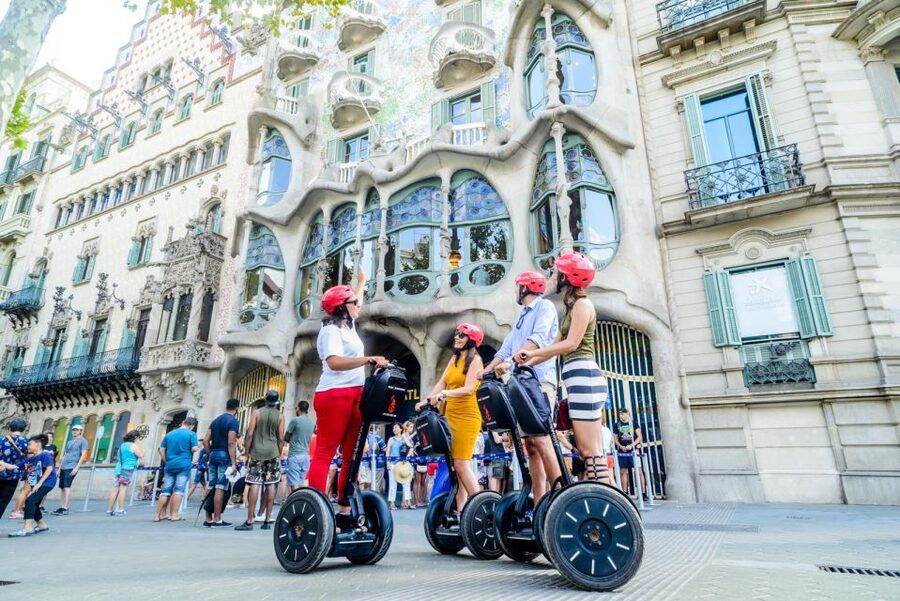
Review · BARCELONA
Barcelona: 2,5hr Art of Gaudí Segway Tour
Barcelona’s Gaudí story is easier to grasp when you see the city unfold around it. This 2.5-hour Segway tour links the Gothic Quarter, Born, Ciutadella Park, Passeig de Gracia and Sagrada Familia without asking you to cover the long distances on foot. You stop for views and explanations, then roll on to the next landmark.
I like two things right away: the route gives you both famous Gaudí buildings and lesser-known Modernisme works, and the small guided groups make city riding more manageable. Guides such as Dani, Maxime, Alberto and Oscar have led tours in several languages. The main drawback is simple: you only view the exteriors, since admission to Casa Batlló, La Pedrera and Sagrada Familia is not included.
Key points to know
- A full-city Gaudí route: See Casa Batlló, Casa Milà, Sagrada Familia, Casa Calvet, Casa Amatller and Casa de les Punxes from outside.
- Old Barcelona comes first: Roman remains, the Gothic Quarter, Born and Santa Maria del Mar add useful context before the Modernisme stops.
- Training is included: You receive a safety briefing and instruction before riding, even if you have never used a Segway.
- Groups can be split small: Tours may include up to 30 people, but larger groups are divided into units of six or fewer with a guide.
- Strict riding rules apply: Segway riders must be at least 14 years old, between 45 and 130 kilograms, and at least 150 centimeters tall.
- Good early-trip activity: Guides can point you toward places to eat and visit during the rest of your Barcelona stay.
Why a Segway works for Gaudí’s Barcelona
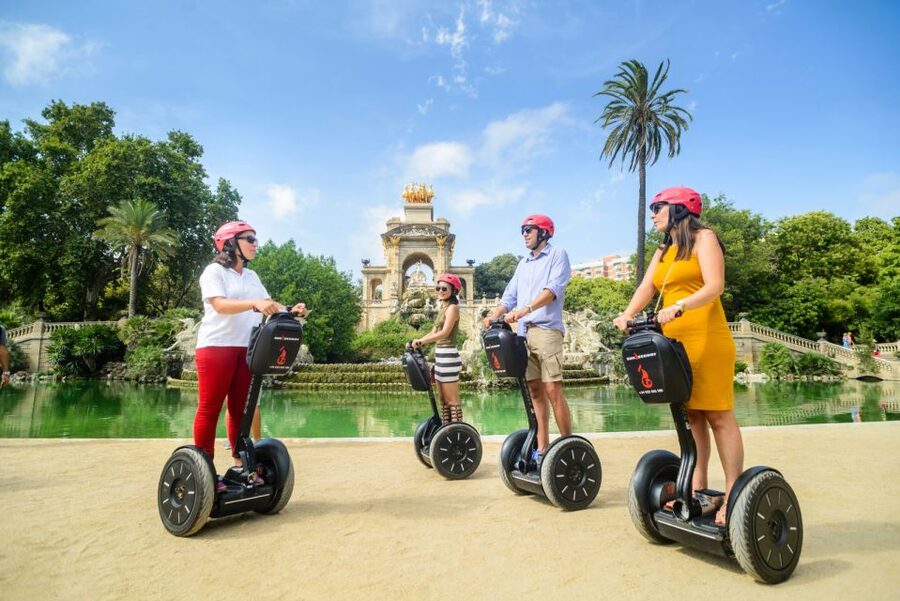
Barcelona’s major Modernisme buildings are spread across several districts. Walking between the waterfront, Ciutadella Park, Passeig de Gracia and Sagrada Familia takes time, especially in summer. A Segway lets you cover more ground while still moving at street level, where you can see the change from old city lanes to the ordered blocks of Eixample.
You are not simply whisked from one photo stop to another. The route begins near the city center, passes through older neighborhoods and then reaches the grand avenues where Barcelona’s wealthy families commissioned elaborate homes. That order matters. Gaudí’s work makes more sense when you first see the medieval city and then the broad streets created as Barcelona expanded.
This is still a moving tour, not a building visit. Most stops last about five minutes, enough for a short explanation and photographs. If you want to study every curve of Casa Batlló or spend an hour inside Sagrada Familia, you will need separate tickets and another visit.
The tour costs about $42 per person. That is fair value if you want orientation, transport between districts, a live guide and basic Segway instruction in one booking. It is less useful if your only goal is interior access to Gaudí’s buildings, since none of the entry fees are covered.
Other segway rides we rate around Barcelona
- Barcelona Segway Tour
★ 5.0 · 680 reviews - Barcelona Segway Tour
★ 4.7 · 630 reviews - Barcelona: City Highlights Guided Segway Tour
★ 4.9 · 624 reviews
Starting with safety at Tres Xemeneies
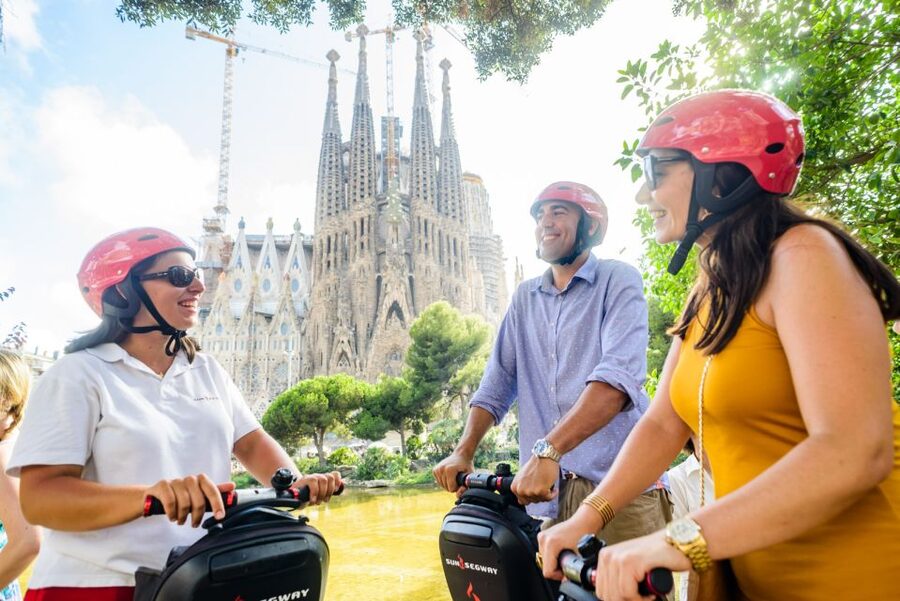
The experience includes Segway rental, helmet and training. At Jardins de les Tres Xemeneies, expect roughly 10 minutes of instruction on safe operation before the city route begins.
That briefing matters. A Segway is quick to learn, but it responds to your balance and body movement rather than a normal throttle and brake setup. The guide needs to see that everyone can control the machine before the group heads into the streets.
Wear comfortable shoes and clothes that let you move easily. Sunglasses help on bright days, while winter participants should bring warm, water-resistant clothing and gloves. Pregnant women and people with back problems should not join, and alcohol or drugs are not allowed.
Children under 14 cannot ride a Segway on this tour. Younger participants may join on e-bikes instead, according to the stated age rule. Anyone riding a Segway must weigh between 45 and 130 kilograms and be at least 150 centimeters tall.
From the harbor to the old city
The first photo stops bring you to the waterfront at Mirador de Colom and El Cap de Barcelona. The Columbus monument marks the lower end of La Rambla, while the modern sculpture known as El Cap de Barcelona gives you a quick reminder that the city’s creative streak did not end with Gaudí.
These stops are short, so expect orientation rather than a long waterfront visit. They help place you on the map before the tour turns toward the oldest quarters.
At Pla de Palau, the guide points out Antoni Gaudí’s lampposts. They are a small work compared with Sagrada Familia, but that is part of their value. You see how Gaudí’s ideas appeared in everyday city furniture, not just in grand houses and churches.
The route then reaches the Gothic Quarter and Born district. The itinerary includes Roman ruins and the Basilica of Santa Maria del Mar. These neighborhoods are among Barcelona’s oldest, with a very different feel from the straight avenues of Eixample.
This is one of the tour’s strongest choices. If you went straight to Casa Batlló and Sagrada Familia, you would see Gaudí as an isolated genius. By passing through Roman and medieval Barcelona first, you get a clearer sense of the city he was reshaping.
Ciutadella Park and the 1888 exhibition

At Parc de la Ciutadella, you ride through Barcelona’s largest park. The park includes the Parliament of Catalonia and Castell del Tres Dragons, a building linked to the 1888 Universal Exhibition.
Gaudí worked on the park’s waterfall and other early projects with Josep Fontserè. The route highlights this period as an early collaboration, before Gaudí had become the famous architect associated with Sagrada Familia. It is a useful stop because it shows an architect still developing his language.
The park also gives you a break from tight old streets and busy avenues. You can ride through a more open setting before reaching Arc de Triomf, the grand entrance built for the 1888 exhibition.
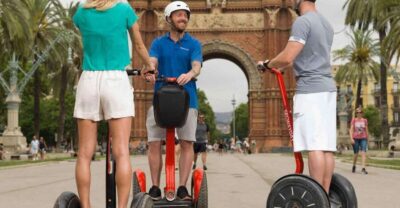
Arc de Triomf is not the Paris monument of the same name, and its red-brick design has its own Catalan character. From here, the tour moves into Eixample, Barcelona’s planned expansion district.
Same streets, another route to glide:
- Barcelona: 2-Hour City Sights Guided Segway Tour
★ 4.9 · 610 reviews - Barcelona: Guided Segway Tour
★ 4.8 · 412 reviews - Barcelona Guided Tour by Segway
★ 5.0 · 374 reviews - Barcelona: City and Seafront Guided Segway Tour
★ 4.9 · 317 reviews
Eixample and the Modernisme competition
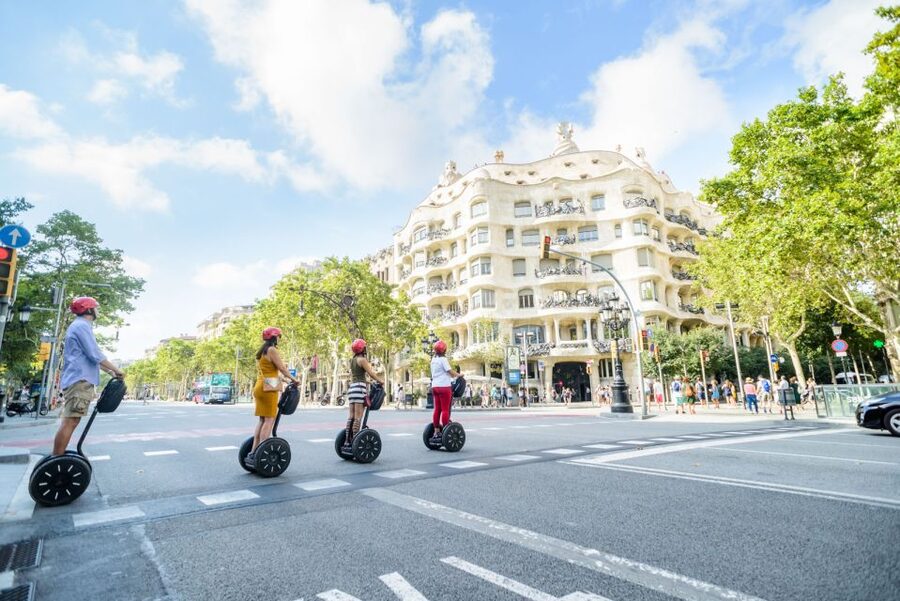
Eixample is where the Gaudí focus really takes over. Its broad avenues and angled corners created space for large apartment buildings, shops and ambitious private homes. Wealthy families competed to hire architects who could give their buildings a distinct look.
The tour travels along Passeig de Gracia, one of Barcelona’s most fashionable streets. You will see luxury shops, but the architecture is the real reason to pay attention. Along the avenue are works by Gaudí and other Modernisme architects, including Casa Calvet, Casa Amatller and Casa de les Punxes.
Casa Amatller sits beside Casa Batlló and was designed by Josep Puig i Cadafalch. Casa de les Punxes, with its pointed towers, shows how varied Catalan Modernisme could be. This is not one single style with a single formula. It is a period of inventive façades, unusual materials and strong personal signatures.
The Segway is useful here because the route covers a long stretch of Passeig de Gracia without making you rush from block to block on foot. Still, keep your expectations realistic. The guide will point out details and explain the buildings, but the short stops do not allow for a full architectural lecture.
Casa Batlló and Gaudí’s playful facade
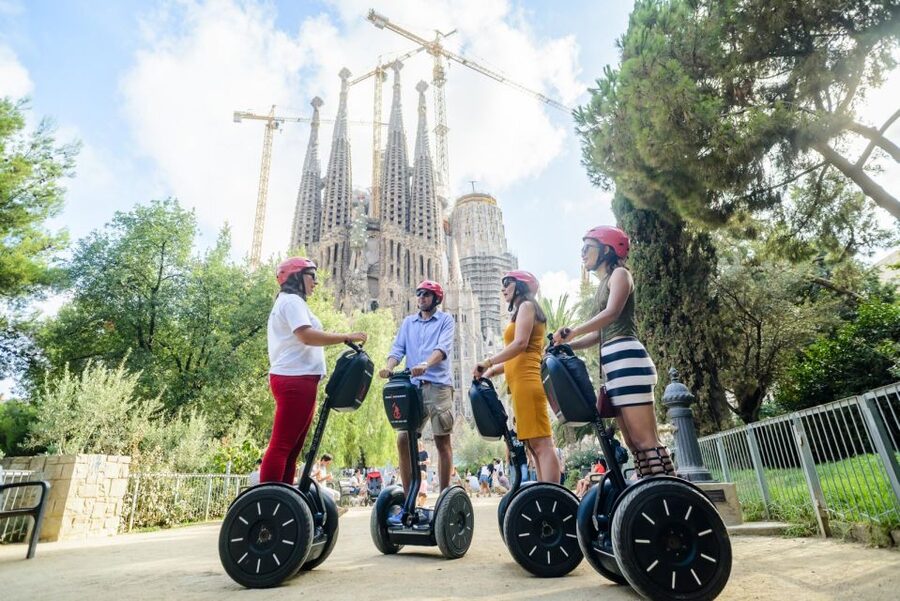
Casa Batlló is the visual high point of the Passeig de Gracia section. Gaudí remodeled the building in the early 20th century, giving it a facade of flowing shapes, colored ceramic, irregular windows and a roofline that suggests scales or a fantastical creature.
The building is often linked to the legend of Saint George and the dragon. The roof can be read as the dragon’s back, while the cross-shaped form at the top suggests the saint’s weapon. Your guide can help you notice these ideas, but you do not need to accept one fixed interpretation to appreciate the facade.
This is a photo stop, not an interior visit. Casa Batlló’s rooms and rooftop require a separate ticket, so plan another time if the inside is high on your list. The tour gives you the context and a chance to compare the building with its neighbors before moving on.
I particularly like this part for first-time visitors because it makes Gaudí’s imagination easy to see. Even if you know little about Modernisme, Casa Batlló communicates through color and shape before the guide says a word.
La Pedrera and the edge of old Gracia
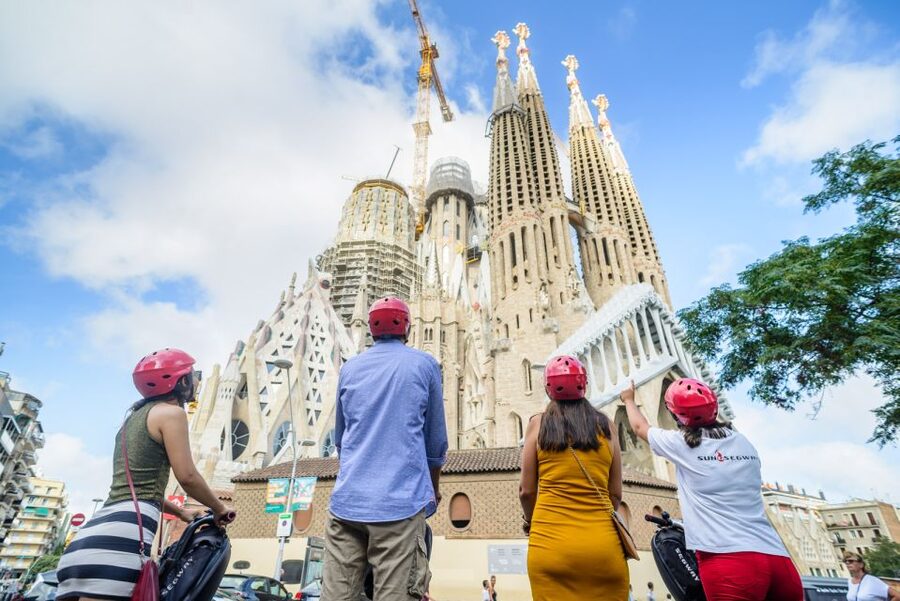
Casa Milà, widely called La Pedrera, is another major stop on Passeig de Gracia. Built in 1906, it was among Gaudí’s final major residential projects. Its rough stone exterior and rolling balconies gave it the nickname La Pedrera, or the stone quarry.
The facade looks less decorative than Casa Batlló, but it is no less daring. The walls seem to move, and the iron balcony rails add a tangled, organic quality. Gaudí treated the apartment block as a complete work, from structure to ornament.
The building once marked the edge between Barcelona and the separate town of Vila de Gracia. Gracia was later annexed to Barcelona, and the city grew around it. That small geographic detail helps explain why this part of the avenue feels like a meeting point between the old town and the expanding modern city.
Again, you see the exterior only. La Pedrera’s interior courtyards, apartment displays and rooftop are separate attractions. If you plan to visit inside later, note the exterior details now and save your energy for a slower visit.
Sagrada Familia, the unfinished masterpiece
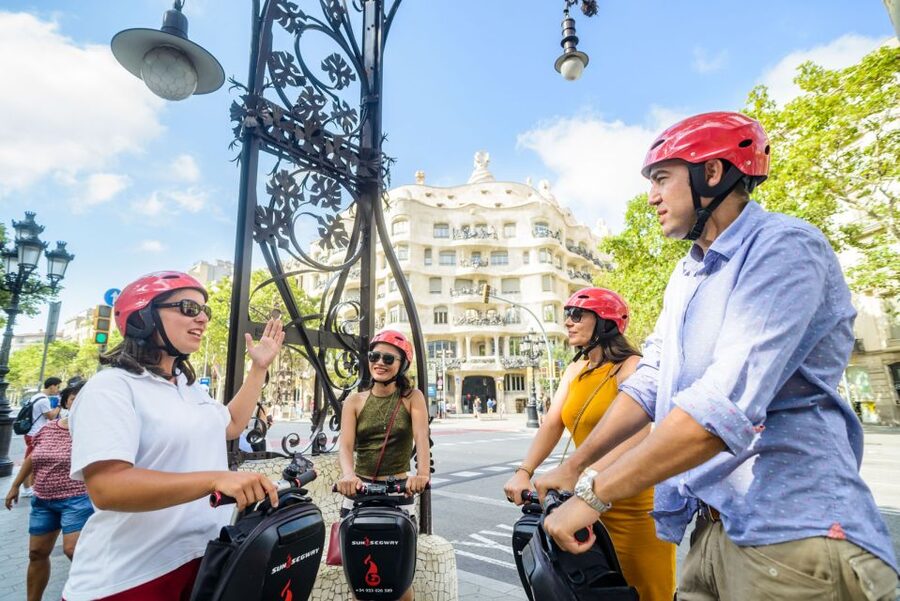
Sagrada Familia is the tour’s most famous stop and the one most likely to leave you wanting more time. Construction began in 1882, and the basilica remains unfinished. Its towers, facades and sculptural details turn Gaudí’s religious vision into a building that keeps changing as work continues.
The route gives you a guided exterior view and time for photographs. You will not enter the basilica, so do not treat this tour as a replacement for a timed admission. The interior is a separate experience and needs its own planning.
Even from outside, the scale is hard to miss. Gaudí designed the building as a symbolic forest of towers, with sculpture and geometry working together. The Nativity Facade, associated with Gaudí’s lifetime of work, is more richly modeled and organic. The Passion Facade has a sharper, more severe style, reflecting a different mood and later construction.
The guide’s explanation can help you separate Gaudí’s original work from the portions built after his death. You may also hear the familiar fact that nobody can give a final completion date with certainty. The building’s long construction is not a side note. It is part of the story.
La Monumental and the return through Born
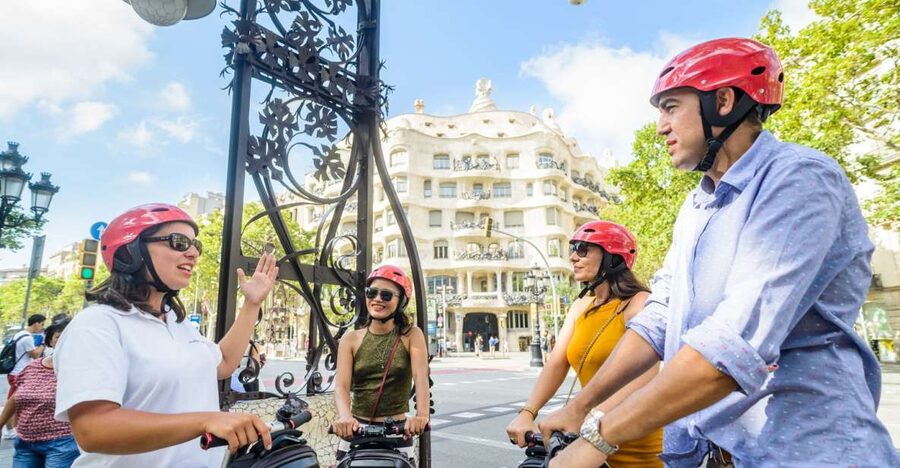
On the return route, you pass La Monumental, the former bullring. Bullfighting was prohibited in Catalonia in 2012, and the building now functions as a reminder of a practice that once occupied a visible place in Spanish public life.
The route then returns toward El Born Centre Cultural and the Basilica of Our Lady of Mercy. Born Centre Cultural is built around an old market structure and archaeological remains, while the basilica adds another religious and architectural reference point to the route.
These final stops broaden the tour beyond Gaudí. You have seen the Gothic Quarter, a medieval church, Roman remains, a former bullring, a park, the harbor and Modernisme. That mix gives you a practical first look at Barcelona rather than a narrow procession of famous facades.
The last listed stop is Parc del Mirador del Poble-sec before returning to the starting area. Depending on the option booked, the precise meeting and drop-off point may vary, so check the details carefully before setting out.
Guides, languages and group size
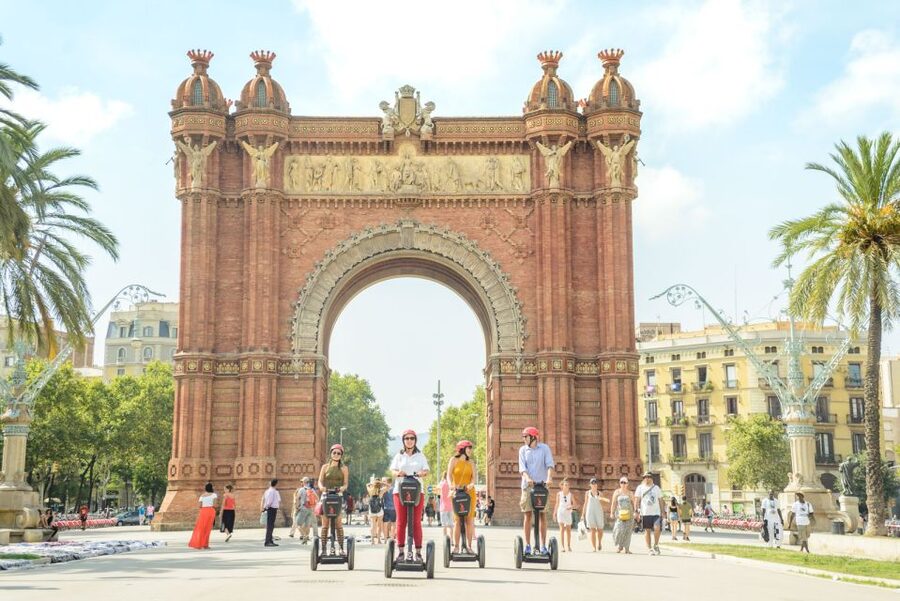
Live guiding is available in Spanish, English, French, Italian, Arabic and Portuguese. The company has used guides including Dani, Maxime, Alberto and Oscar, and the experience can be arranged as a private group.
The guide can make a major difference because the route contains many short stops. You need someone who can explain a facade quickly, keep the group together and watch traffic and pedestrians. Dani has been singled out for clear French and careful attention to safety, while other guides have been praised for adapting the route to what participants had already seen by bus.
A group can contain up to 30 people, but larger bookings are split into groups of six or fewer, each with a professional guide. That arrangement is much more practical than having 30 Segways move through the city as one cluster.
If you already know Barcelona well, a private group may be worth considering. You can place more emphasis on architecture, old neighborhoods or practical city advice. If you are new to Segways, a standard small group should still give you the needed instruction and support.
Who should book this tour?
I would choose this tour early in a Barcelona stay. It covers many districts and gives you a useful mental map, while the guides can suggest places to eat and visit later. It also suits anyone who wants to see the major Gaudí exteriors without spending a full day walking between them.
It is a good match for:
- First-time Barcelona visitors who want a broad orientation.
- Adults and teens aged 14 or older who meet the riding requirements.
- Anyone comfortable with a moving sightseeing tour and short photo stops.
- Architecture fans who want to compare Gaudí with other Modernisme designers.
- Couples, families with eligible older children, and private groups seeking a flexible outing.
You may prefer a walking tour if you want long stops in the Gothic Quarter or detailed street-level history. You should also book a separate Gaudí building visit if interiors matter to you. This tour does not include food, drinks, hotel pickup, or admission to any attraction.
Free cancellation is available up to 24 hours before the start time, and you can reserve now and pay later. Tips for guides are not included. Bring your passport or ID card, since it is listed among the required items.
Should you book it?
Book this Barcelona Gaudí Segway tour if you want to cover a lot of ground, prefer a live guide and are happy seeing the major buildings from outside. At $42, the combination of instruction, helmet, vehicle and guiding makes sense for a first look at the city.
Skip it if you want slow museum-style visits, dislike riding in city streets or cannot meet the age, height or weight rules. For most eligible visitors, the best plan is to take this tour near the start of your stay, then return on foot to the one or two buildings you want to explore inside.
FAQ
How long is the Barcelona Art of Gaudí Segway Tour?
The tour lasts 2.5 hours, including the initial Segway instruction and the sightseeing route.
What is included in the tour price?
The price includes Segway rental, a helmet, a training session and a live guide.
Does the tour include entry to Sagrada Familia, Casa Batlló or La Pedrera?
No. The tour visits these buildings from outside. Admission to all attractions is excluded.
What languages are available?
Guiding is available in Spanish, English, French, Italian, Arabic and Portuguese.
What is the minimum age for riding a Segway?
The minimum age for Segway participants is 14. Children younger than 14 may join the tour on e-bikes.
Are there weight and height requirements?
Yes. Segway riders must weigh between 45 and 130 kilograms and be at least 150 centimeters tall.
How large is the group?
A tour can accommodate up to 30 participants. Larger groups are divided into smaller groups of six or fewer, each with a professional guide.
Is hotel pickup included?
No. Hotel pickup and drop-off are not included. The meeting and return points may vary according to the option booked.
Can I cancel or pay later?
You can cancel up to 24 hours in advance for a full refund. The booking option also allows you to reserve now and pay later.
Just added for riders around Barcelona
- Highlights of Barcelona Segway Tour★ 5.0 · 41 reviews
- Welcome to Barcelona Segway and eScooter Tour★ 5.0 · 2 reviews
- Segway Tour to Sagrada Familia views★ 5.0 · 5 reviews
- Sagrada Familia – 2H Segway Tour★ 5.0 · 9 reviews
- Seaside Segway Tour in Barcelona★ 5.0 · 33 reviews
- Montjuic Panoramic Segway/e-Bike Tour★ 5.0 · 48 reviews
- Sagrada Familia Segway Tour★ 5.0 · 12 reviews
- Barcelona: Montjuïc Segway Tour★ 5.0 · 64 reviews
Barcelona Segway Tours: how they compare.
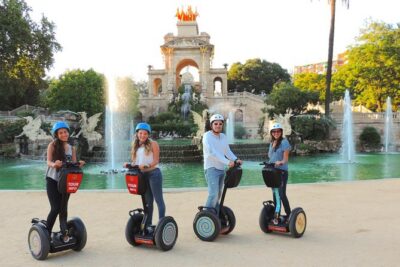
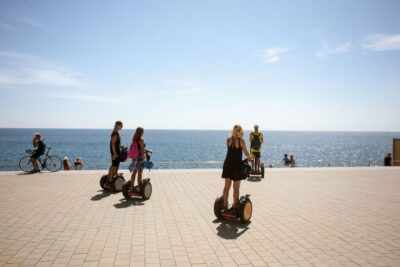
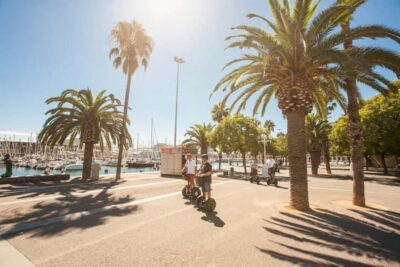
Barcelona: 2-Hour City Sights Guided Segway Tour
Read our review →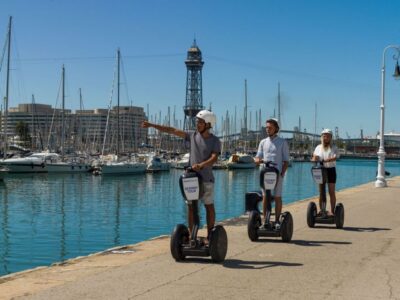

Barcelona: City and Seafront Guided Segway Tour
Read our review →
Barcelona: Old Port and Gothic Quarter Guided Segway Tour
Read our review →Find this segway ride in