
Review · MUNICH
Munich Third Reich and WWII Segway Tour
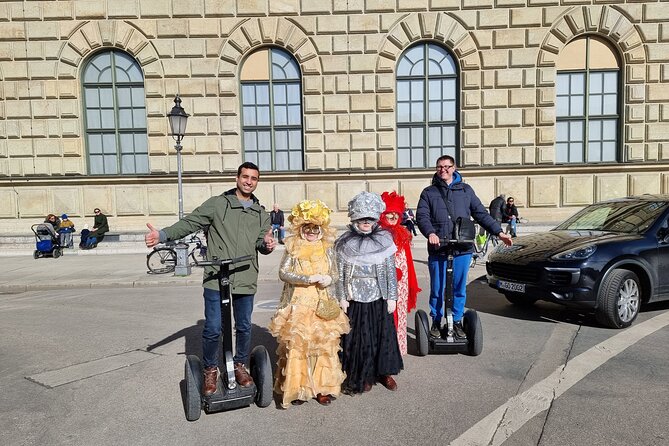
Munich’s Nazi past is spread across the city, and this three-hour Segway tour links those places in one moving lesson. You’ll ride from Königsplatz and the Führerbau to the White Rose sites, Hofbräuhaus, Odeonsplatz, and the Maximilianeum while your guide explains how Munich became central to Hitler’s political rise.
I like the way the tour covers far more ground than a walking route, and I like the practical help for first-time riders. Guides such as Karl, Josef, Claudia, and Rawen have earned praise for clear explanations, patience, photo stops, and good humor.
The main caution is simple: a Segway is exposed to the weather, and the ride can feel cold even when Munich seems mild. One rider also found the downtown route crowded and expected more WWII-focused stops, so you should be ready for a mix of political history, city sights, and ordinary shopping streets.
Key points to know before you book
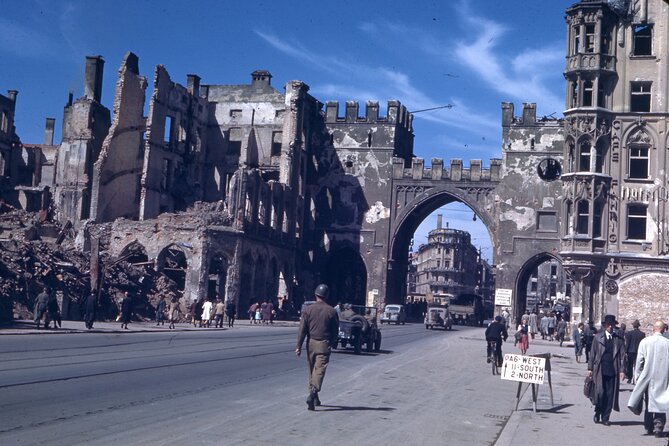
- Munich’s Nazi-era landmarks in one route: See the Führerbau, Braunes Haus site, Hitler’s former apartments, Königsplatz, and Odeonsplatz.
- A faster way to cover the city: The Segways let you reach sites spread across central Munich without spending the entire morning on foot.
- Useful for first-time riders: Guides allow time to get comfortable, and several riders found the machines easy to learn.
- Guides make a real difference: Karl, Josef, Claudia, and Rawen are praised for patience, local context, questions, and photographs.
- Expect more than WWII history: The route also includes the Hofbräuhaus, Residenz, Angel of Peace, Maximilianeum, and central shopping streets.
- Plan for the weather: You will be outside for about three hours, so warm clothing matters on a cold day.
Why a Segway works for Munich’s difficult history
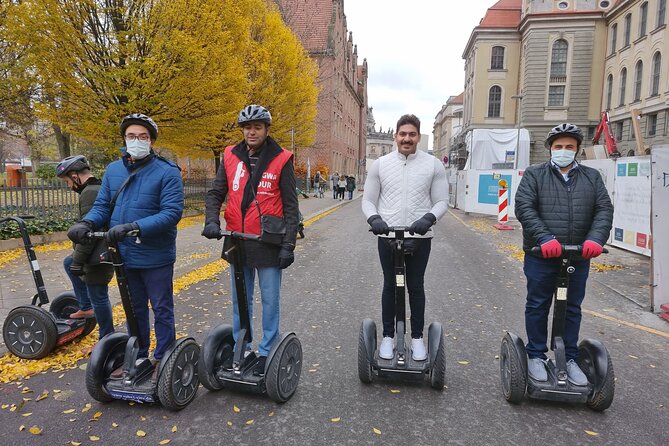
Munich is a walkable city, but the places tied to the Nazi period are not all clustered around one square. A walking tour can cover them, but you may spend much of your time crossing between stops. On a Segway, you can move from one district to another and still have time to pause at important locations.
That matters here because the tour is not built around one museum or a single building. It connects political offices, public squares, former residences, resistance sites, and major city landmarks. You get a broad view of how the story sits within modern Munich rather than treating it as an isolated chapter.
The format also keeps the tour active. You are not standing in one spot for long stretches while trying to remember dates. You ride, stop, listen, ask questions, and continue. I find that rhythm useful in a city where the Nazi-era traces can be easy to miss.
Still, this is not a quiet historical seminar. You are sharing roads and public spaces with other people, and the route may pass through busy downtown areas. If you want a detailed museum-style discussion of wartime artifacts, this probably will not replace a museum visit or a longer specialist tour.
Other segway rides we rate around Munich
- Munich: City Highlights Guided Segway Tour
★ 4.6 · 266 reviews - Munich 3-Hour Segway Tour: Nazi Munich & Royal Architecture
★ 4.9 · 194 reviews - Munich Segway Tour
★ 5.0 · 181 reviews
Starting at Artur-Kutscher-Platz
The tour starts at Artur-Kutscher-Platz 2A, 80802 Munich, at 10:00 in the morning. It returns to the same meeting point after roughly three hours, which makes it fairly easy to fit into a Munich sightseeing day.
The group can include up to 20 people. That is not a private tour, so the amount of individual attention depends on the guide and group size. The good news is that the guide-led format allows questions and photo breaks, and the strongest comments about the experience focus on personal help rather than a rushed ride.
Near public transportation, the meeting point is practical, though you should allow enough time to arrive before the 10:00 start. Confirmation is provided at booking, and the activity is offered in English.
Your guide will give you time to become comfortable with the Segway. This is important if you have never used one. Several riders describe the machines as easy to learn, but one person did report a Segway failure and a fall. That incident did not result in serious injury, according to the account provided, but it is a useful reminder to listen carefully during the safety briefing and ride within your comfort level.
Königsplatz and the Führerbau
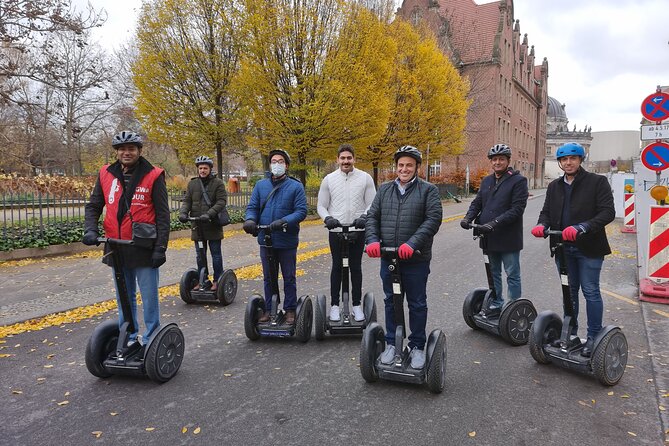
Königsplatz is one of the tour’s most important early stops. Its grand setting gives the guide room to explain Munich’s role in the rise of Hitler and the Nazi movement. You are not just looking at a pretty square. You are being asked to connect architecture, public space, and political ambition.
The nearby Führerbau is another central stop. The name alone signals the building’s place in the Nazi period, and it helps make the tour’s subject concrete. Instead of hearing only about national events, you see the Munich locations that played a part in that story.
The route also includes the former Braunes Haus site. These stops work well together because they show how political power was represented in the city. Your guide can place them within the wider story of Hitler’s arrival in Munich in 1912, his failed early ambitions, and his later rise.
You should expect interpretation rather than entry into a large collection of indoor exhibits. The itinerary lists free admission, and the value comes mainly from the guide’s explanation and the sequence of locations.
Hitler’s Munich years, from 1920 to 1933
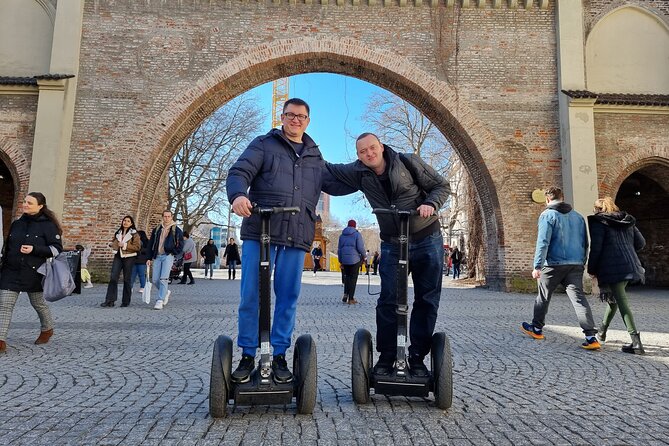
Two stops focus on Hitler’s former apartments: one associated with 1920 to 1929, and another connected with 1933. These locations help divide the story into stages rather than presenting his rise as one sudden event.
The tour also visits the Hofbräukeller and Hofbräuhaus. Munich’s beer halls are part of the city’s everyday identity, but here they also provide a setting for political history. The guide discusses the Beer Hall Putsch and why it failed, giving you a clearer sense of the early movement’s struggle to gain power.
The Hofbräuhaus is also a practical example of the tour’s mixed character. You are not spending every minute at a formal memorial. You are riding through places that remain part of present-day Munich, with the guide explaining what happened there and what the city looks like now.
Some people will appreciate that contrast. Others may expect a tightly focused WWII route and feel that the beer halls or shopping streets take time away from military history. I would book this as a tour of Munich’s Nazi-era political story, not as a complete account of World War II.
Same streets, another route to glide:
- Munich: City Highlights Guided Segway Tour
★ 4.5 · 161 reviews - Munich’s Highlights 3-hour Segway Tour
★ 5.0 · 76 reviews - Munich Classic City Segway Tour (English or German Guide)
★ 5.0 · 65 reviews - Munich: Third Reich and World War II Segway Tour of the City
★ 4.1 · 44 reviews
The White Rose and resistance to Nazi rule
The itinerary includes the White Rose, an important change in focus. Until this point, much of the tour follows the rise and machinery of the Nazi movement. The White Rose introduces the people who tried to oppose it.
This part gives the tour needed balance. You are not left with the impression that Munich’s story was only about Hitler, party offices, and political rallies. The guide also addresses resistance and the risks faced by those who challenged the regime.
Because the route covers several sites in one morning, the amount of time at each location may vary. If the White Rose is your main reason for booking, ask questions while you are there and take notes if you want to explore the subject in more detail later.
I like this portion because it gives the route a moral and human dimension. It also helps you see why a city tour can be useful for difficult history. The important places are not always dramatic monuments. Sometimes the guide’s explanation is what makes a location meaningful.
Haus der Kunst, the Angel of Peace, and the Maximilianeum
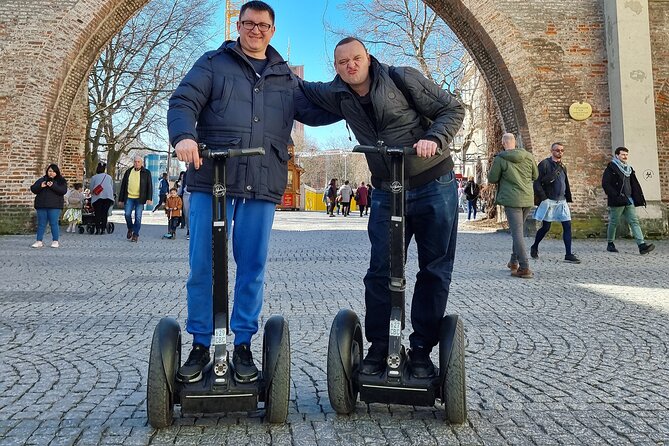
The tour continues to Haus der Kunst, the Angel of Peace, and the Maximilianeum. These stops broaden the subject beyond Hitler’s personal story and place the Nazi period within Munich’s larger civic setting.
Haus der Kunst fits naturally into a discussion of cultural power and political ambition, while the Angel of Peace and Maximilianeum show the grand public side of Munich. The guide uses these places to explain how the city was shaped, presented, and imagined during the period covered by the tour.
The route’s variety is one of its strengths. You will see major buildings and public spaces rather than only small plaques or former offices. That makes the three-hour ride feel like a city orientation as well as a history tour.
The tradeoff is that some stops may be viewed from outside or discussed briefly. This is a moving overview, not a building-by-building architectural tour. If you want detailed interiors at the Residenz or Haus der Kunst, you will need separate time.
Residenz, Odeonsplatz, and Munich’s wider story
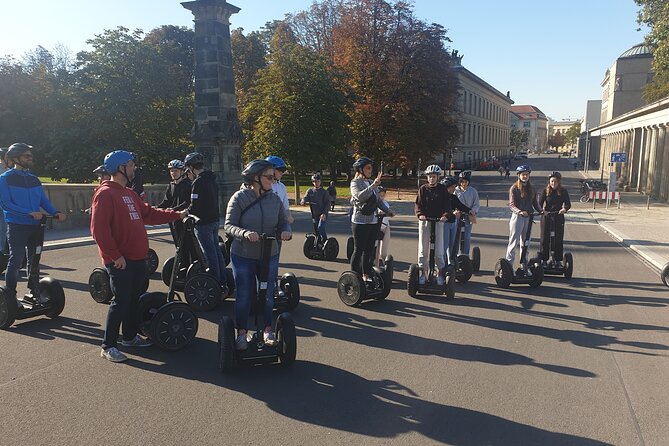
Residenz München and Odeonsplatz appear near the end of the route. These are useful closing stops because they connect the political story to Munich’s older royal and civic identity.
Odeonsplatz is especially important within the tour’s narrative because it brings the route back to the public spaces where power, ceremony, and conflict shaped the city. The guide also includes Maximilianeum Strasse, adding another stretch of central Munich to the ride.
You may pass through ordinary streets and shopping areas between the major sites. One rider found the downtown section too crowded and expected a stronger WWII focus. I would treat that as a fair warning rather than a flaw for everyone. The city streets are part of the ride, and they allow you to see how historical locations fit into modern Munich, but they can interrupt the mood.
The route is best for people who want a broad, physical sense of the city. You will not remain inside a carefully controlled historical setting. You will encounter present-day Munich along with its difficult past.
Guides, pacing, and the human side of the tour
The guide can make or break a history tour, especially one that covers sensitive material while operating on moving vehicles. The strongest guide feedback centers on Karl, Josef, Claudia, and Rawen.
Karl is praised for being friendly, informative, patient with questions, and willing to help with photographs. Josef receives similar praise for explaining Munich and its history while making the ride enjoyable for a family with teenagers. Claudia handled a less organized day well when one guide did not arrive, and Rawen is noted for tailoring the route to the group and helping a first-time rider feel safe.
You should not assume a particular guide will lead your departure, but these names give you a sense of the service style to expect. The better guides do more than recite facts. They adjust to nervous riders, pause for photos, and respond to what interests you.
The maximum group size is 20. That is small enough to feel manageable but large enough that you should not expect a private conversation at every stop. A private tour has also been praised for adapting the route to places the group had not yet seen, but the standard booking information does not promise a private experience.
Price, value, and who gets the most from it
At $82.82 per person, this is not the cheapest way to see Munich. You are paying for the vehicle, guide, training time, and the ability to cover a wide route in about three hours. The value is strongest if you have limited time, enjoy active sightseeing, or find long walking tours tiring.
I think the price makes sense for a first day in Munich when you want orientation and historical context at once. You can see major central sights, learn the outline of the Nazi period, and get a feel for how the city’s districts connect.
The value is weaker if you already know central Munich well or want an intensive WWII study. The route includes modern streets, major landmarks, beer halls, and broader Bavarian history. It is not designed as a museum replacement.
Families and couples are a natural fit. Teenagers aged 14 and 17 reportedly enjoyed the ride, and children old enough to follow the history may appreciate the change from a standard walking tour. You should also consider your balance and comfort on a Segway. Most participants can take part, but the ride is not completely risk-free.
Weather, clothing, and practical planning
Dress for the temperature, not just the forecast. A rider moving through Munich for three hours can feel colder than someone walking between indoor sights, and one specific warning from the experience is to bundle up on a cold day.
The tour is offered in English and uses a mobile ticket. It starts at 10:00 and ends back at the starting point, so you can plan another activity afterward without arranging a separate return journey.
Free cancellation is available if you cancel at least 24 hours before the start time. Cancellations made later are not refunded, and changes made inside that 24-hour window are not accepted. The activity also requires a minimum number of participants, so if the operator cancels for that reason, you are offered another date or experience, or a full refund.
Should you book this Munich Segway tour?
Book it if you want to cover a lot of Munich quickly, prefer an active outing to a long walk, and want a guide to connect Nazi-era sites with the city around them. It is especially useful early in your stay, when the route can help you understand where the central sights sit.
Skip it if you want a quiet, highly focused WWII study, dislike riding in city traffic, or plan to spend most of your time inside museums. Also think twice about a cold-weather departure unless you can dress warmly.
For the right person, this is a lively and practical way to approach serious history. You get the Führerbau, Königsplatz, the White Rose, former apartments, beer halls, Odeonsplatz, and several major Munich landmarks in one morning. Just book it for the broad city story, not for every detail of World War II.
FAQ
How long is the Munich Third Reich and WWII Segway Tour?
The tour lasts approximately three hours.
What time does the tour start?
The scheduled start time is 10:00 am.
Where does the tour begin?
It begins at Artur-Kutscher-Platz 2A, 80802 Munich, Germany.
Where does the tour end?
The activity ends back at the meeting point.
Is the tour offered in English?
Yes. The tour is offered in English.
How many people can join the tour?
The activity has a maximum group size of 20 people.
Do I need previous Segway experience?
Previous experience is not stated as a requirement. The tour allows time to get used to the Segway, and several participants found the machines easy to learn.
Can I cancel for a refund?
Yes. You can cancel at least 24 hours before the start time for a full refund. Cancellations made less than 24 hours before the start are not refunded.
Just added for riders around Munich
- Munich 2-Hour Segway Tour★ 5.0 · 15 reviews
- Segway tour Munich Beer Stories (3h)★ 5.0 · 3 reviews
- Beer Testing Segway Tour in Munich★ 3.5 · 2 reviews
- Munich’s Highlights 3-hour Segway Tour★ 5.0 · 76 reviews
- Segway Tour Munich Old Town 3 hours★ 4.5 · 10 reviews
- Munich Classic City Segway Tour (English or German Guide)★ 5.0 · 65 reviews
- 2-Hour Segway Discovery Munich Night Tour★ 5.0 · 2 reviews
- 2-Hour Segway Discovery Tour Munich★ 5.0 · 20 reviews
Munich Segway Tours: how they compare.
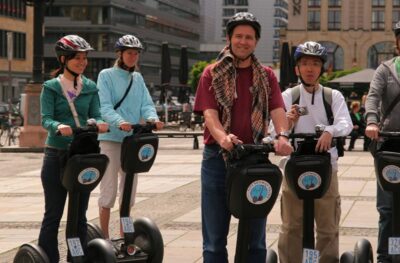
Munich 3-Hour Segway Tour: Nazi Munich & Royal Architecture
Read our review →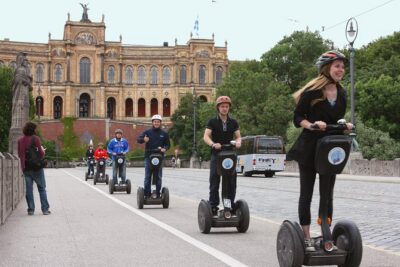
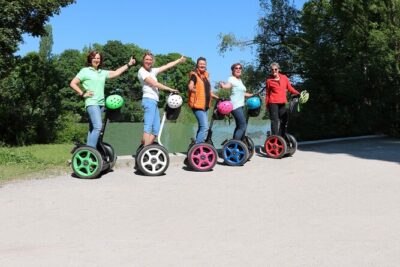
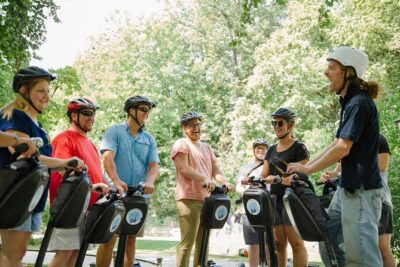
Munich Classic City Segway Tour (English or German Guide)
Read our review →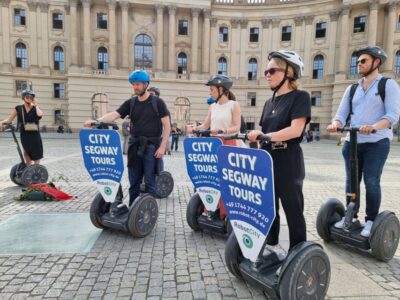
Munich: Third Reich and World War II Segway Tour of the City
Read our review →
Find this segway ride in